


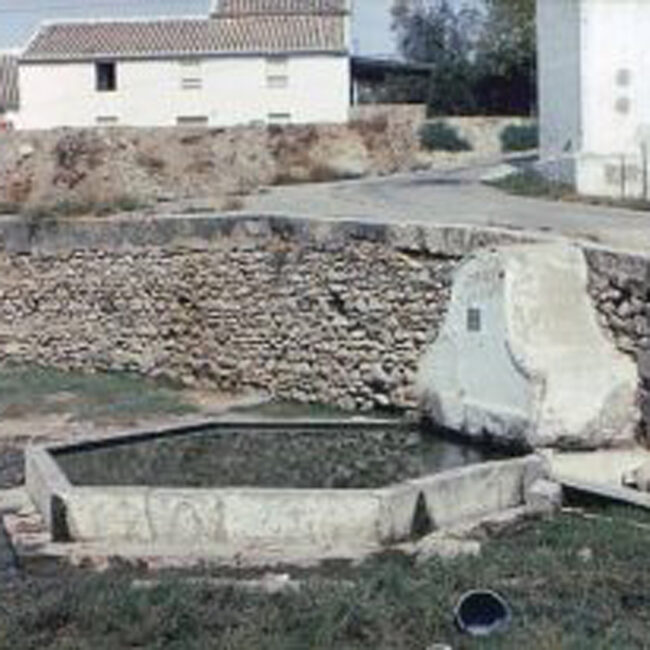
La Fontaine Neuve, située dans le lieu-dit de l’Alcaparral, à côté de la N-432, fut pendant des siècles un important point d’approvisionnement en eau pour les habitants d’Espejo. Déjà mentionnée au XIXe siècle par Ramírez de las Casas-Deza, elle remplissait des fonctions essentielles en tant que lavoir, abreuvoir et source d’eau potable.
Sa structure actuelle se compose d’un pilier de plan trapézoïdal et d’un mur en maçonnerie avec un bec versant l’eau dans l’abreuvoir. Comme beaucoup d’autres fontaines traditionnelles, son usage a diminué avec le temps, mais elle reste un témoignage du lien historique entre les établissements humains et l’eau.
The Fuente Nueva, located in the Alcaparral area next to the N-432, was for centuries an important water supply point for the inhabitants of Espejo. Already mentioned in the 19th century by Ramírez de las Casas-Deza, it served key functions as a washhouse, watering trough, and drinking fountain.
Its current structure consists of a trapezoidal basin and a masonry wall with a spout that pours water into the trough. Like many other traditional fountains, its use has declined over time, though it remains a testament to the historical bond between human settlements and water.
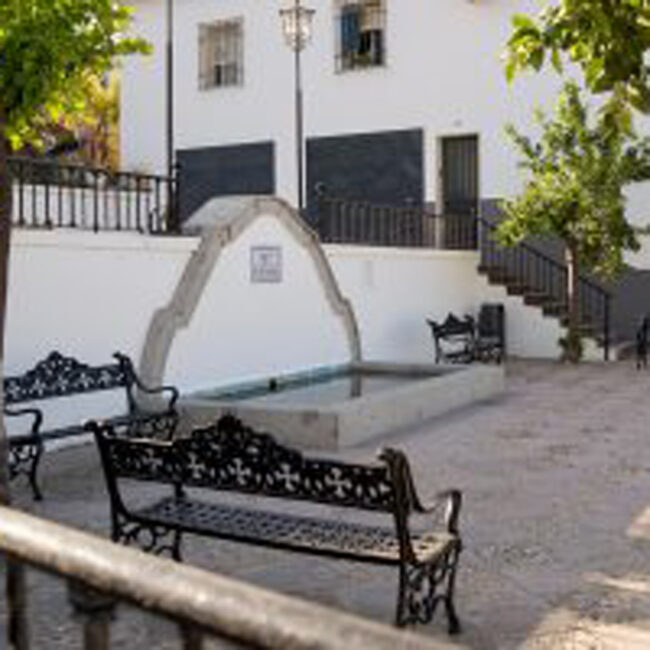
Le Pilar Salado, situé dans la partie nord d’Espejo, doit son nom à ses eaux saumâtres. Il fut l’une des rares fontaines disponibles dans une ville historiquement marquée par la pénurie d’eau potable. Dès le XVIIe siècle, des documents mentionnent des réparations urgentes financées par les habitants lors d’une grave sécheresse. Son existence illustre les difficultés historiques d’Espejo à s’approvisionner en eau.
The Pilar Salado, located in the northern part of Espejo, owes its name to its brackish waters. It was one of the few available fountains in a town historically marked by the scarcity of drinking water. As early as the 17th century, records mention urgent repairs funded by local residents during a severe drought. Its existence reflects Espejo’s long-standing difficulties in securing a reliable water supply.
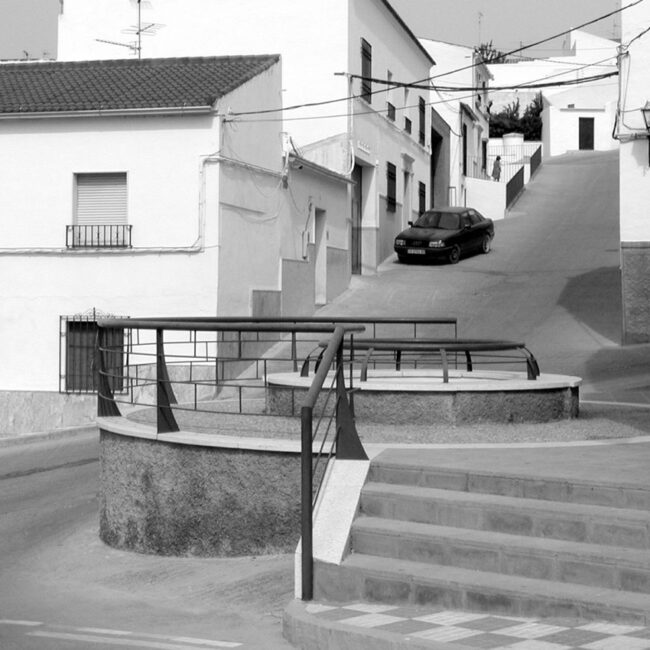
Le puits Mármol, situé dans le centre urbain d’Espejo, est l’un des nombreux puits historiques qui ont approvisionné la population avant l’arrivée de l’eau courante. Bien que non potable, il servait la communauté aux côtés d’autres puits tels que celui de San Roque ou le puits disparu de San José. Espejo possédait autrefois un vaste réseau de puits et de fontaines — comme la Fuente Nueva, le Pilar Salado ou le puits du cimetière — utilisés pour la consommation domestique, les lavoirs et les abreuvoirs. On distingue également les sources de la Mina et de La Alcubilla, qui fournissaient de l’eau potable, ainsi que de nombreuses autres réparties sur le territoire communal, témoignant d’une lutte constante pour l’accès à l’eau.
The Mármol Well, located in the urban center of Espejo, is one of the many historic wells that supplied the population before the arrival of running water. Although not drinkable, it served the community alongside others such as the San Roque Well or the now-disappeared San José Well. Espejo once had an extensive network of wells and fountains — such as the Fuente Nueva, the Pilar Salado, or the cemetery well — used for domestic consumption, washing places, and watering troughs. Also noteworthy are the Mina and La Alcubilla springs, which provided drinking water, along with many others scattered throughout the municipality, reflecting a constant struggle for access to water.
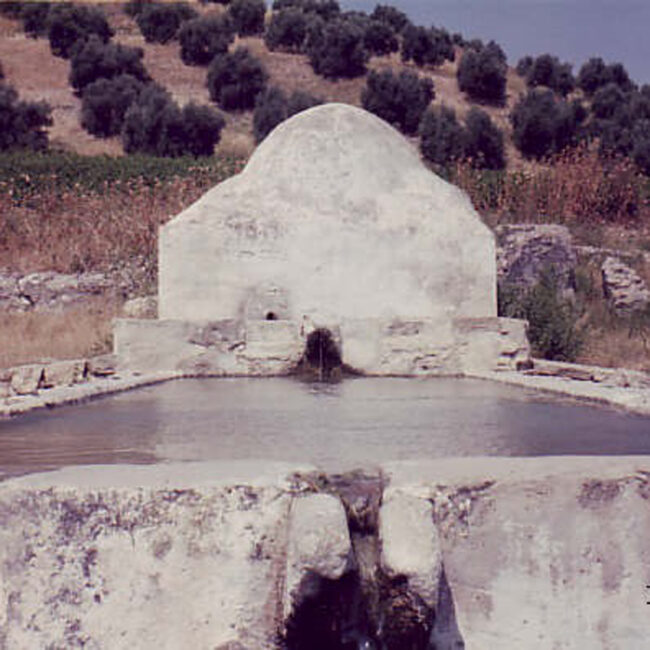
La Citerne d’Espejo, située à 1 km du village le long de l’ancienne voie romaine menant à Obulco, est un réservoir d’eau construit vers 45 av. J.-C., probablement sur un ancien lieu de culte turdétan. De plan carré et dotée d’une voûte percée d’oculi, elle fut l’œuvre des soldats césariens et faisait partie d’un réseau hydraulique romain qui alimentait la ville d’Ucubi. De là, une galerie souterraine conduisait l’eau jusqu’à la fontaine de l’Aljibe. Fouillée et restaurée en 1988, elle constitue un exemple vivant de l’ingénierie hydraulique romaine.
The Espejo Cistern, located 1 km from the town along the ancient Roman road to Obulco, is a water reservoir built around 45 BC, possibly over a former Turdetanian place of worship. With a square plan and a vaulted roof pierced by oculi, it was constructed by Caesarian soldiers and formed part of a Roman hydraulic network that supplied the city of Ucubi. From it, an underground gallery carried water to the Aljibe Fountain. Excavated and restored in 1988, it stands as a living example of Roman hydraulic engineering.
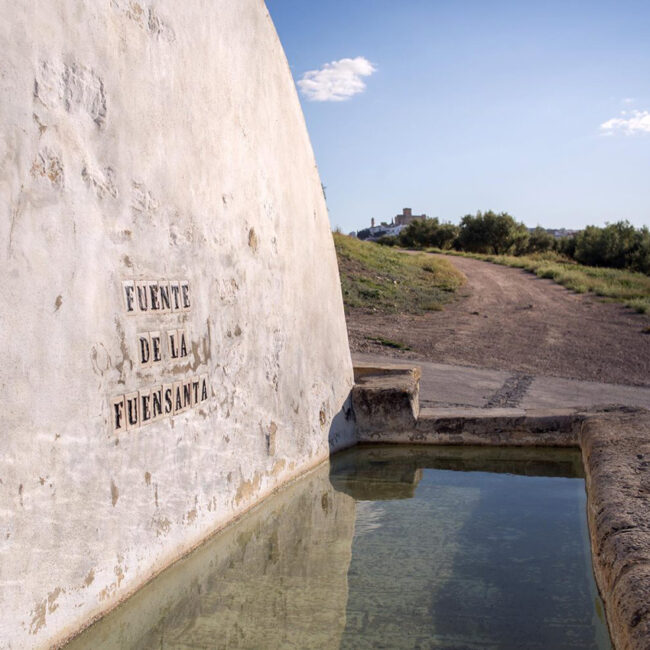
L’abreuvoir de la Fuensanta, situé à environ 2 km d’Espejo, fut pendant des siècles un point vital d’approvisionnement en eau. Ses eaux, issues d’une ancienne citerne romaine, étaient considérées comme curatives. Au XVIe siècle, un ermitage dédié à la Vierge de la Fuensanta, patronne locale, fut construit au-dessus, faisant de ce lieu un centre de culte et de rassemblement populaire, notamment lors du pèlerinage du 8 septembre. Cet abreuvoir reflète l’importance historique et symbolique de l’eau dans la vie quotidienne des habitants d’Espejo.
The Fuensanta watering trough, located about 2 km from Espejo, was for centuries a vital point for obtaining water. Its waters, drawn from an ancient Roman cistern, were considered to have healing properties. In the 16th century, a hermitage dedicated to the Virgin of Fuensanta, the local patron saint, was built above it, turning the site into a place of worship and popular gathering, especially during the pilgrimage held on September 8. This watering trough reflects the historical and symbolic importance of water in the daily life of the people of Espejo.


