


La citerne-nymphée romaine d’Espejo, construite vers 45 av. J.-C., fut édifiée sur un ancien sanctuaire turdétan consacré au culte de l’eau et à ses propriétés curatives. Cette œuvre hydraulique monumentale, dédiée aux nymphes, symbolise l’importance de l’eau comme source de vie et de protection dans différentes cultures. Sa structure, réalisée en grands blocs de pierre de taille, reflète l’ingéniosité romaine et l’influence des légions césariennes dans la région.
Après être tombée en désuétude au IIIe siècle, la citerne fut réutilisée à l’époque andalouse, lorsque ses voûtes furent adaptées pour faciliter l’extraction de l’eau au moyen d’un système de poulies. À l’époque moderne, l’approvisionnement fut transféré à la fontaine voisine, mais la citerne demeure un témoignage remarquable de l’ingénierie hydraulique romaine et de la continuité du culte de l’eau à Espejo.
The Roman cistern-nymphaeum of Espejo, built around 45 BC, was erected over an ancient Turdetanian sanctuary dedicated to the worship of water and its healing properties. This monumental hydraulic structure, dedicated to the nymphs, symbolizes the importance of water as a source of life and protection across different cultures. Its construction, made of large ashlar blocks, reflects Roman ingenuity and the influence of the Caesarian legions in the region.
After falling into disuse in the 3rd century, the cistern was reused during the Andalusian period, when its vaults were adapted to facilitate water extraction through a pulley system. In the Modern Age, the water supply was redirected to the nearby fountain, but the cistern remains an outstanding testament to Roman hydraulic engineering and to the enduring tradition of water worship in Espejo.
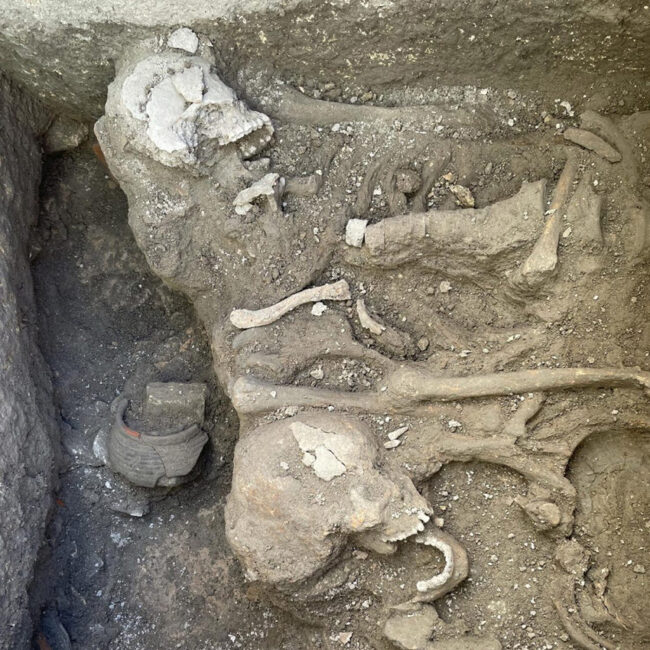
Le puits Alcalá est situé à l’extérieur de l’ancienne colonie romaine Claritas Iulia Ucubi, fondée après la bataille de Munda en 45 av. J.-C. Sous Auguste, la ville fut urbanisée et monumentalisée, bien qu’une grande partie repose aujourd’hui sous le tissu urbain actuel.
Les vestiges découverts correspondent probablement à un édifice thermal romain, abandonné au IIIe siècle et réutilisé par la suite, notamment à l’époque andalouse, lorsque la zone servit également de nécropole. Ce lieu reflète la continuité historique d’Espejo depuis l’Antiquité jusqu’à la période musulmane.
The Alcalá Well is located outside the ancient Roman colony Claritas Iulia Ucubi, founded after the Battle of Munda in 45 BC. Under Augustus, the city underwent urban and monumental development, although much of it now lies beneath the modern town.
The remains discovered here likely correspond to a Roman bath complex, abandoned in the 3rd century and later reused in subsequent periods, including the Andalusian era, when the area also served as a necropolis. This site reflects the historical continuity of Espejo from antiquity through the Muslim period.

Sur le versant nord de la colline où se trouve la ville d’Espejo se situent les vestiges d’un réservoir d’eau circulaire identifié comme le lacus ou bassin terminal d’un aqueduc qui, venant du Monte Horquera, dans les hauteurs de Nueva Carteya, alimentait en eau la colonie romaine Claritas Iulia Ucubi.
Construit en mortier (opus caementicium), d’un diamètre de 35 mètres et d’une épaisseur de près d’un mètre, il s’agit de l’un des ouvrages d’ingénierie hydraulique romaine les plus remarquables de la province de Cordoue. Il peut être daté de la fin du Ier siècle av. J.-C., en lien étroit avec la transformation de la ville ibérique d’Ucubi en colonie romaine et le développement urbain qui en résulta.
On the northern slope of the hill where the town of Espejo sits are the remains of a circular water reservoir identified as the lacus or terminal tank of an aqueduct that, originating from Monte Horquera in the highlands of Nueva Carteya, supplied water to the Roman colony Claritas Iulia Ucubi.
It is built of mortar (opus caementicium), with a diameter of 35 meters and a thickness of nearly one meter, making it one of the most remarkable examples of Roman hydraulic engineering in the province of Córdoba. It can be dated to the late 1st century BC, closely linked to the organization of the Iberian city of Ucubi as a Roman colony and the urban development that this transformation entailed.
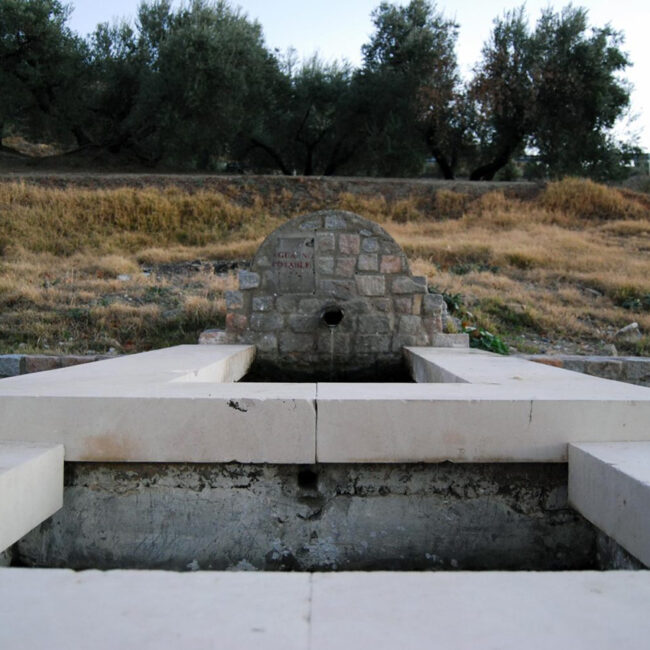
À Espejo, la rareté des grands cours d’eau a rendu nécessaire l’utilisation de fontaines comme celle de Tejadilla, située à côté de la N-432. Cette fontaine a historiquement fourni de l’eau potable à la population et aux cultures environnantes.
La fontaine possède un seul bec jaillissant d’une conduite souterraine en maçonnerie, se déversant dans un abreuvoir rectangulaire relié à un bassin carré. L’eau est ensuite canalisée vers le cortijo voisin de Tejadilla.
In Espejo, the scarcity of large watercourses has made it necessary to rely on fountains such as the Tejadilla Fountain, located next to the N-432. This fountain has historically supplied drinking water to the population and nearby crops.
The fountain has a single spout that emerges from an underground masonry conduit, pouring into a rectangular trough connected to a square basin. From there, the water is channeled toward the nearby Tejadilla farmhouse.
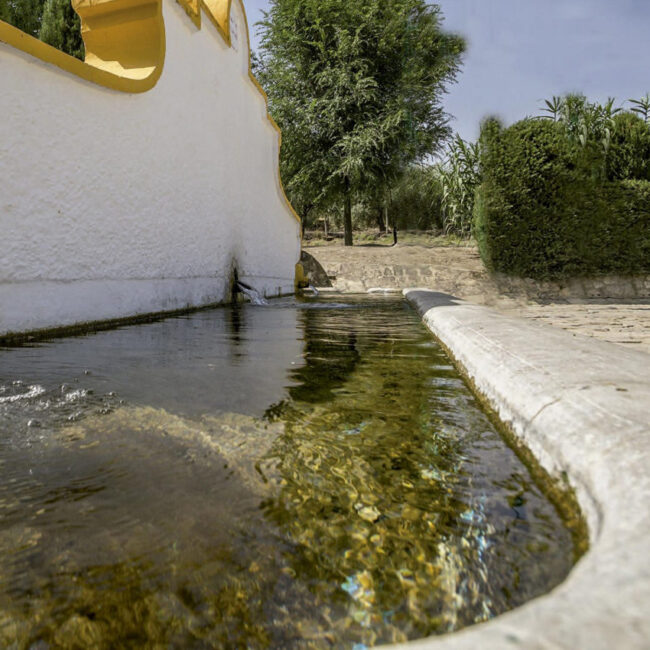
À 4 km d’Espejo, le long de la route menant à Nueva Carteya, se trouve le parc périurbain El Borbollón, un lieu entouré d’oliveraies et de sources d’eau potable, idéal pour profiter de la nature.
Cet endroit est habité depuis la préhistoire, comme en témoignent les vestiges de haches en pierre polie. Il fut l’une des sources les plus abondantes de la province et approvisionna le village pendant des décennies, jusqu’à l’utilisation de l’eau du réservoir d’Iznájar.
L’ensemble architectural se distingue par son fronton baroque avec quatre becs versant l’eau dans un abreuvoir en maçonnerie. L’eau excédentaire est canalisée vers un ruisseau qui prend naissance à cette source, appelé le ruisseau du Borbollón.
About 4 km from Espejo, along the road to Nueva Carteya, lies the peri-urban park El Borbollón, a natural area surrounded by olive groves and freshwater springs, ideal for enjoying nature.
This site has been inhabited since prehistoric times, as evidenced by remains of polished stone axes. It was once one of the most abundant springs in the province and supplied water to the town for decades, until water from the Iznájar reservoir began to be used.
The architectural ensemble is notable for its Baroque pediment with four spouts that pour water into a masonry trough. The excess water is channeled into a stream that originates from this spring, known as the Borbollón Stream.


