


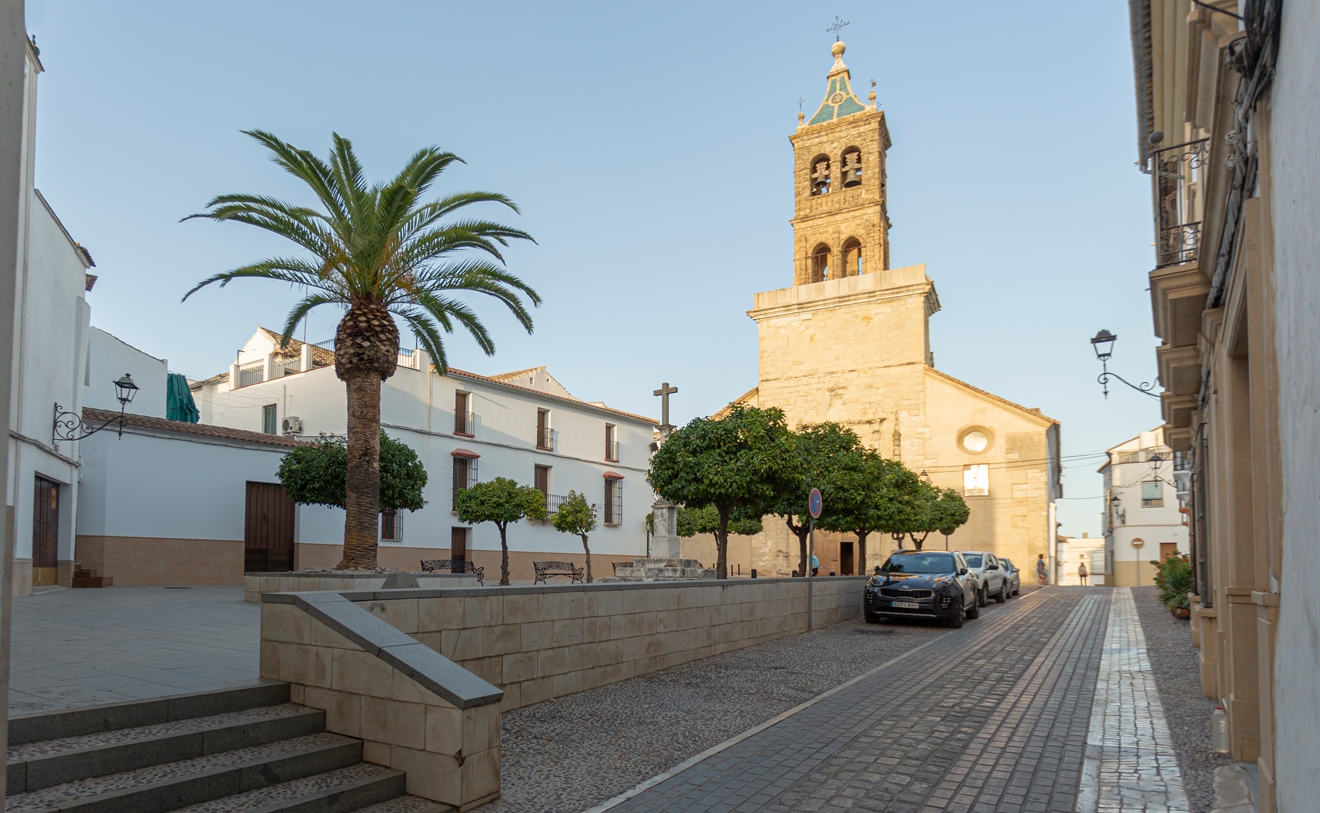
The Parish Church of Our Lady of the Assumption is the spiritual and heritage heart of Castro del Río. Located in the Villa quarter, its silhouette crowns the historic center and holds within it centuries of history, art, and devotion.
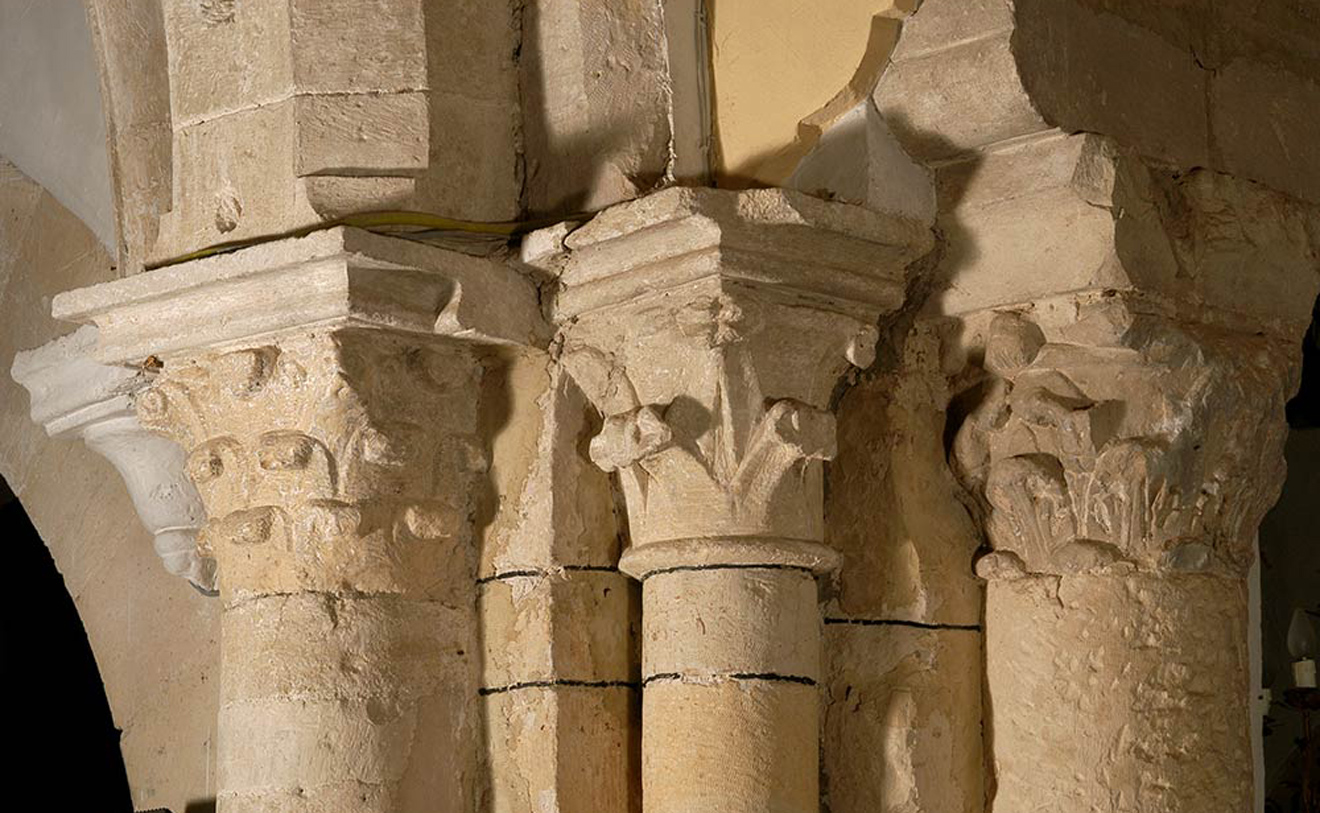
After the Christian conquest of 1240 by Ferdinand III, the former Muslim settlement was transformed into the head of the Archdeaconry of La Campiña, and in this context one of the first rural temples of the Diocese of Córdoba was built. Although the current church dates from the 13th century, there are indications that it reused a former mosque, as suggested by the presence of a pointed horseshoe arch of Almohad design. Over the centuries, the church has absorbed Mudejar, Gothic, and Baroque styles, adapting to the liturgical and aesthetic needs of each period.
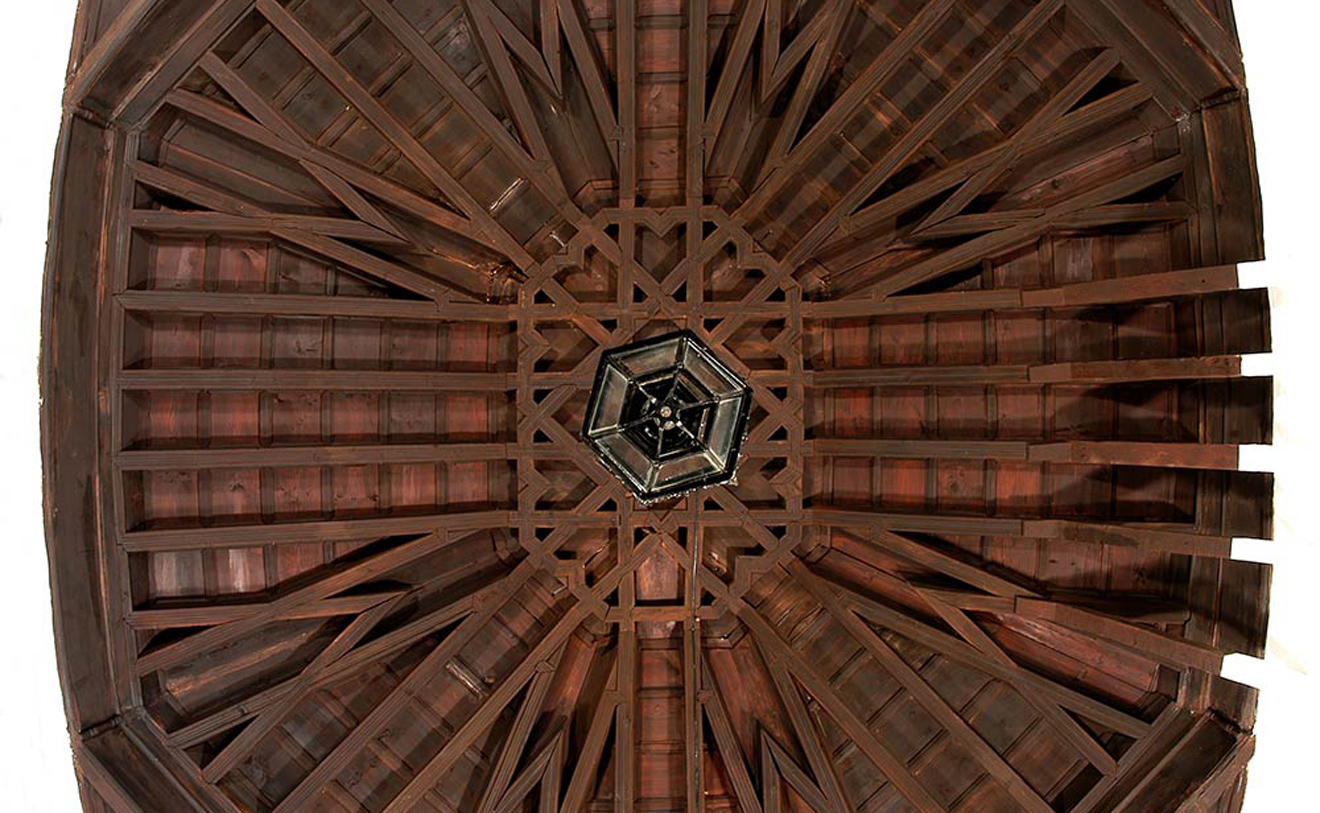
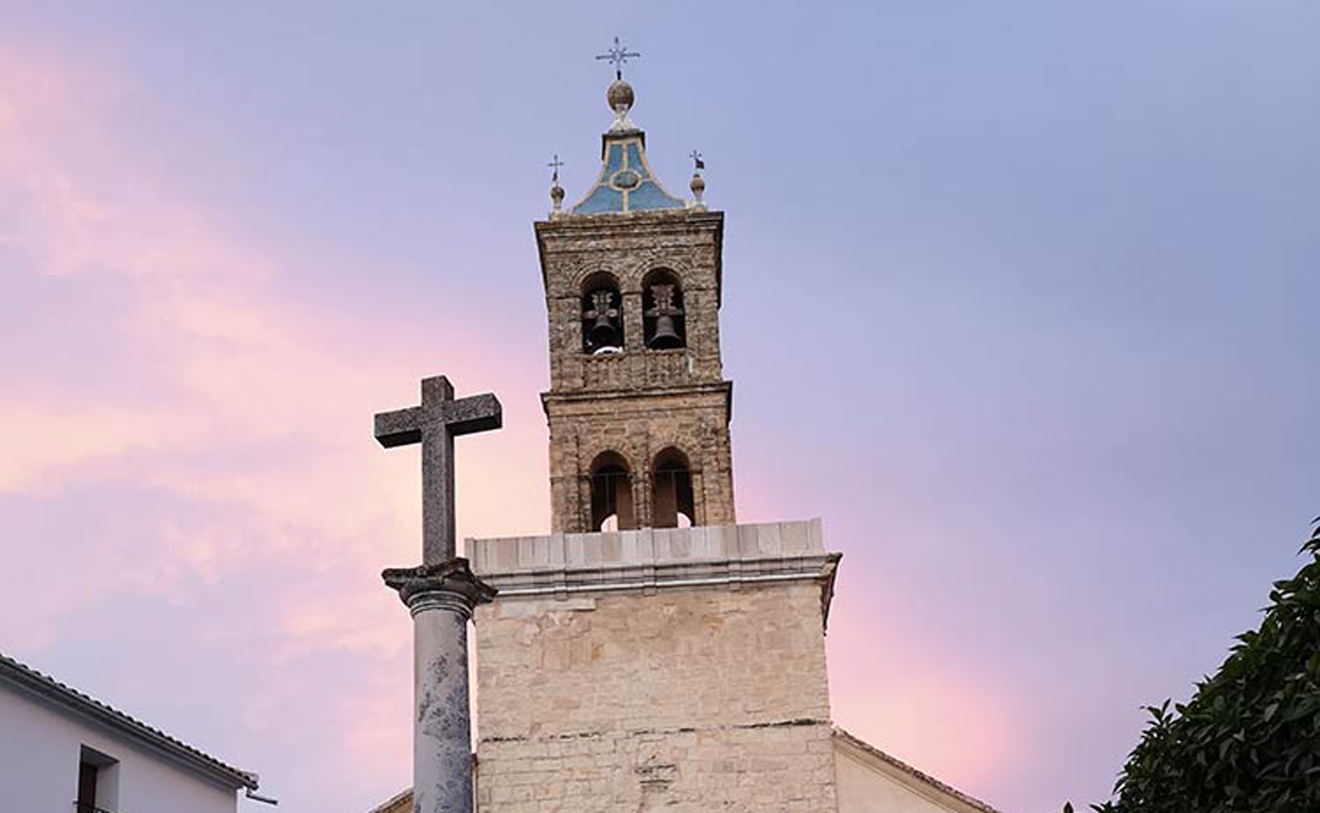
Particularly notable are the Plateresque doorway from 1523 and the bell tower with military features, attributed to Hernán Ruiz II. Inside, in addition to its three-nave layout, remarkable artistic elements include an 18th-century Crucified Christ, the walnut choir stalls, and the frescoes and altarpieces that adorn its chapels. Today, it remains a cultural and religious landmark where centuries of faith, art, and Castreño identity converge.

The Convent of Saint Dominic of Scala Coeli was a prominent 17th-century Baroque building in Castro del Río, founded in 1631 by the Marchioness of Priego. Although it was destroyed after a fire during the Spanish Civil War, its bell tower and main doorway are still preserved, now integrated into the Hospital of Jesús Nazareno.
Currently, the tower —with a square floor plan and three levels— houses the Casa de la Cultura (Cultural Center), the Museum of Antique Photography, and the Municipal School of Music. Declared a Site of General Cataloguing in 1994, it remains a landmark of Castro del Río’s heritage.
The Church of Jesús Nazareno, originally known as the Hermitage of Saint Benedict, is an interesting building of simple architecture constructed between 1700 and 1733. It preserves the usual layout of a Latin cross with shallow transept arms. Its austere structure is enlivened in the crossing by a profuse decorative program of paintings, which includes a wide range of themes—from human and symbolic representations to purely ornamental motifs such as vegetal designs.
Regarding iconography, in the dome (media naranja) appear the symbols of the Passion, above the Cardinal Virtues represented on the pendentives, while the upper sections of the transept walls are reserved for the Church Fathers. On the vault of the presbytery are depictions of the Holy Trinity, the Immaculate Conception, and Christ.
On the exterior, the main façade is designed as a rectangular surface crowned by a pediment, featuring highly plastic geometric panels dated to 1712, closely related to the contemporary works of Hurtado Izquierdo. Inside the church, one can admire the Main Altarpiece, crafted in 1734 by Gaspar Lorenzo de los Cobos, along with the sculptures of Jesús Nazareno (which presides over the altarpiece), Saint John, and Our Lady of the Greatest Sorrow — all works by the Sevillian sculptor Castillo Lastrucci.
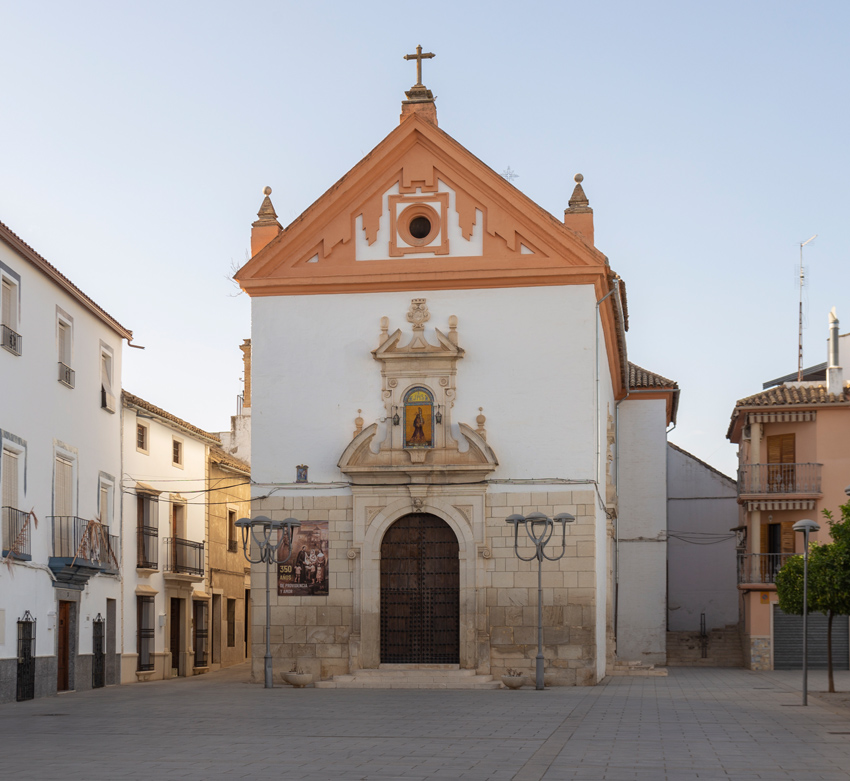
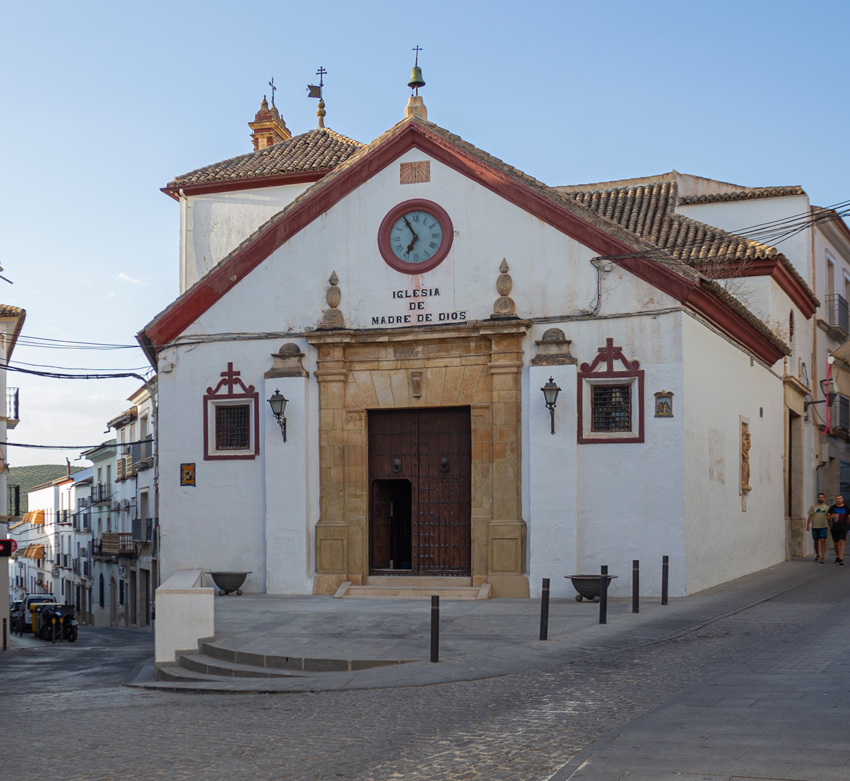
Built in 1430, the Church of Madre de Dios underwent later renovations, with the years 1607 and 1647 inscribed on its portals. As a result of these successive works, this church stands as one of the most original and curious temples in the province of Córdoba. It features a trapezoidal floor plan and a wooden roof. The irregular plan is essentially the outcome of two perpendicular churches from different periods, occupying a wedge-shaped space at the intersection of two streets.
On the corner façade, there is a simple front with a gabled roof and a lintelled doorway from 1607, topped by an entablature resting on pilasters and finials rising above a cornice. Inside, a Baroque altarpiece stands out, adorned with important oil paintings on canvas by Atencia de Zúñiga.
This 18th-century church is notable for its small-scale architecture, yet it preserves all the characteristic components of a conventual temple. It features a Latin cross floor plan with three naves, a transept, and a square apse. The elegant and orderly façade also dates from the 18th century. Inside, various wood-carved and polychrome sculptures, as well as oil paintings on canvas, all from the same period as its construction, are preserved. Today, the space houses the Antonio Villa-Toro Museum, dedicated to the internationally renowned Castreño painter associated with expressionist art.
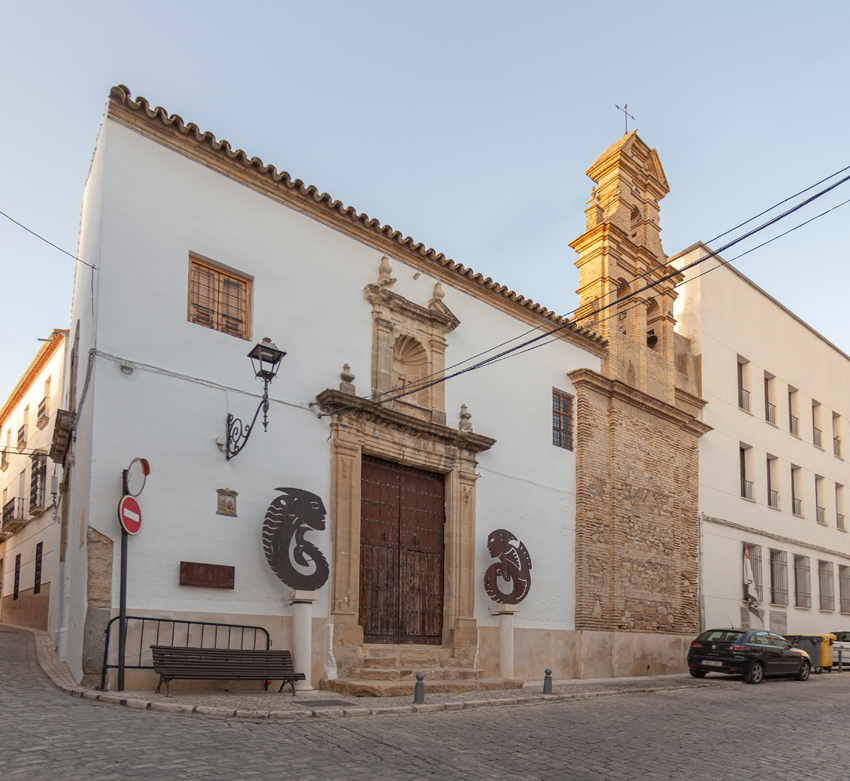
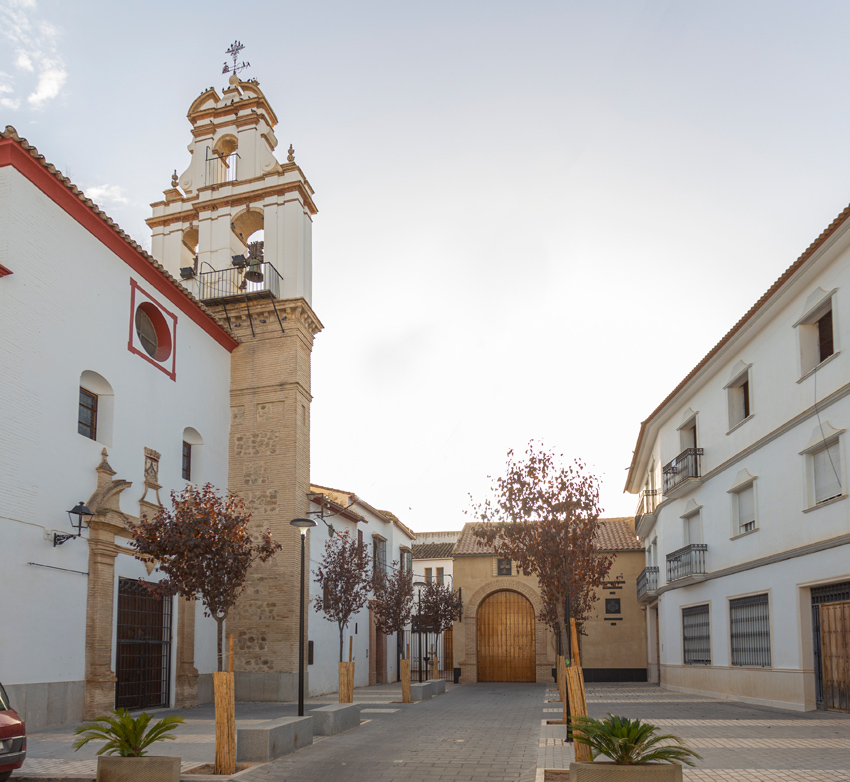
The origin of this conventual temple dates back to 1554, when it was founded by the Order of Discalced Carmelites. The Church of Our Lady of Mount Carmel houses important sculptural works, such as the carving of Christ of Mercy by Castillo Lastrucci, the image of Mary Most Holy of Solitude from 1944, and the Holy Sepulchre, all of which are carried in procession during Holy Week on the night of Good Friday.
It is a single-nave church with barrel vaults, featuring a slender transept with short arms, centered by a dome and a square apse. On the exterior, the church has two façades, the main one built of brick with pilasters and moldings, where the coat of arms of the Carmelite Order can be seen. Adjoining the church is the porticoed courtyard of the former convent, with semicircular arches resting on columns.


