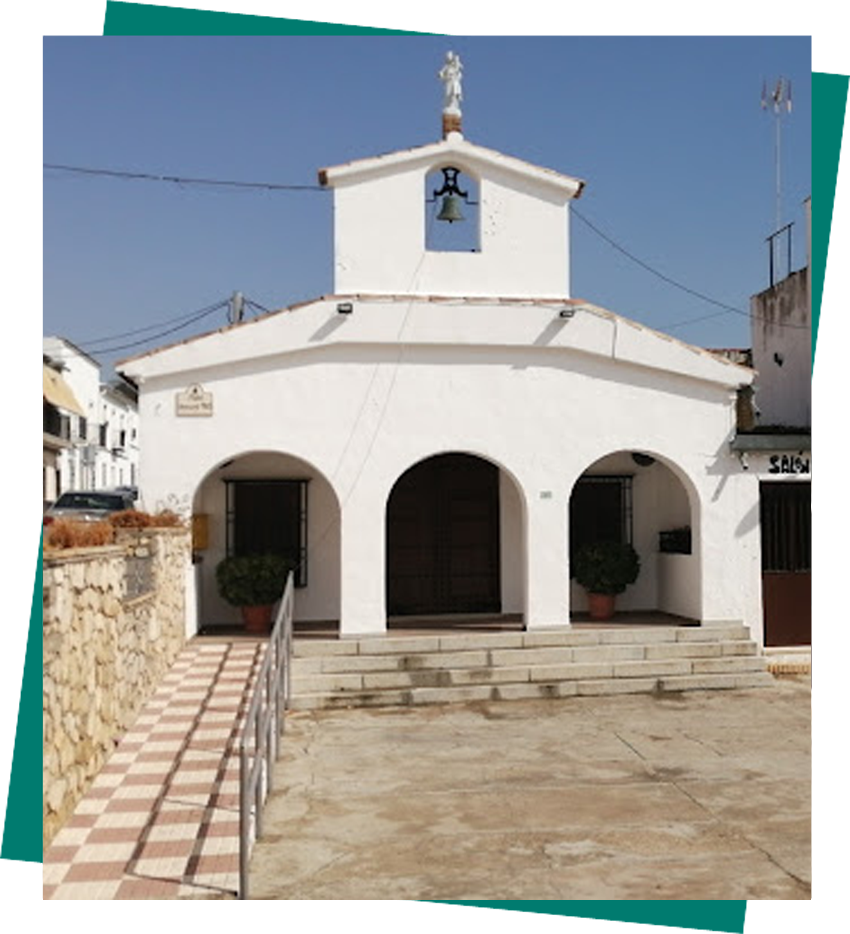
Llano del Espinar is a hamlet of the municipality of Castro del Río (Córdoba), located about 600 meters above sea level, in a transitional area between the countryside and the foothills of the Sierra de Cabra. Its name comes from an ancient expanse of thorny bushes that once covered the area. The settlement developed from workers of several nearby farmsteads (such as Magdaleno, La Cubana, or Molino de Jorgillo) and at the intersection of important livestock routes.
The local economy revolves mainly around agriculture, with olive groves and vineyards playing a leading role. The wine produced here belongs to the Montilla-Moriles Designation of Origin, highly recognized both within and beyond Andalusia. The agricultural landscape shapes the daily life and cultural identity of the village.
Parish Church of Our Lady of Fátima and Christ of Love
The Parish Church of Our Lady of Fátima and Christ of Love, located in Llano del Espinar, is the main temple of this hamlet of Castro del Río. Built in 1950, its simple architecture reflects the functionality and rural character of the community. Inside, it houses highly venerated images, such as Our Lady of Fátima and Christ of Love, which preside over religious celebrations and local processions.
This church is the epicenter of the religious festivities in Llano del Espinar, particularly the Pilgrimage of Our Lady of Fátima, held every May 13th. During this celebration, the image of the Virgin is accompanied by numerous devotees in a procession that culminates with a solemn mass at the church. The temple also hosts events such as the Living Nativity, in which the residents actively participate, thereby strengthening the social and cultural fabric of the hamlet.
Traditions and Cultural Life
The most representative festivities of Castro del Río are the patronal feast in honor of Our Lady of the Assumption, celebrated in August with processions, open-air dances, and religious events, and Holy Week, during which several brotherhoods parade images of great artistic and devotional value through the streets. In Llano del Espinar, the pilgrimage of the Virgin of Fátima stands out, bringing together residents and visitors each year in an atmosphere of faith and community celebration.
Beyond the festivities, Castro del Río preserves traditions deeply linked to its cultural identity. Olive wood craftsmanship remains alive in workshops that combine inherited techniques with modern creativity, producing furniture and decorative pieces recognized even beyond Spain. Traditional cuisine also maintains its importance, with recipes such as salmorejo, gachas, roscos fritos, and various matanza products, which continue to be part of daily life and family celebrations.