


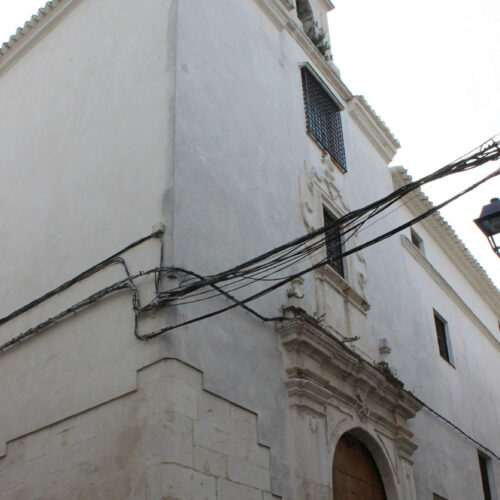
Built in the late 18th century, this Baroque church preserves elements inherited from the Andalusian world. Its dome on pendentives is an evolution of Islamic techniques used to connect rectangular and circular spaces. In addition, the attention to light and interior decoration reflects an ornamental style that, although Christian, retains influences from centuries of Islamic art in the region.
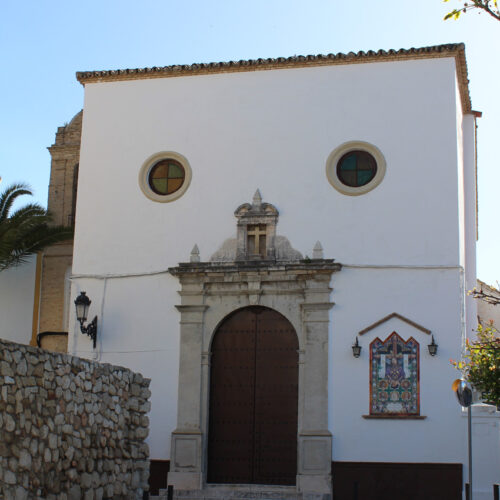
Built in 1711 on the site of an old hospital, the church preserves Mudejar and Andalusian features. Its cloistered courtyard with semicircular arches recalls Islamic courtyards, while the tiled lattice floor and beamed roof reflect traditional Andalusian construction techniques. The building thus illustrates the enduring presence of Islamic art in popular Cordoban architecture.
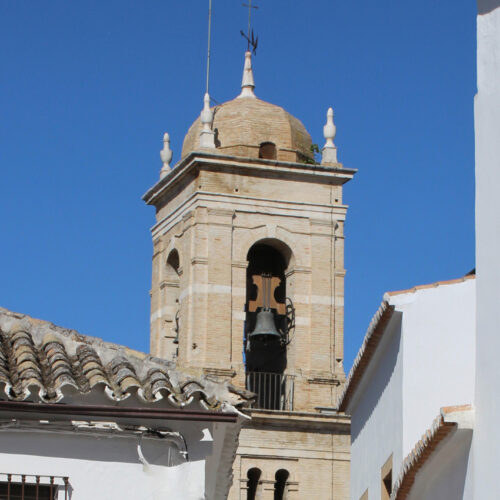
Probably a former rural mosque, Saint Bartholomew was adapted after the Christian conquest. It preserves Gothic vaults and a Mudejar coffered ceiling that reflects Islamic influence. Notable features include its 16th-century wrought-iron screen and a carved pulpit — symbols of the encounter between Andalusian and Christian traditions.
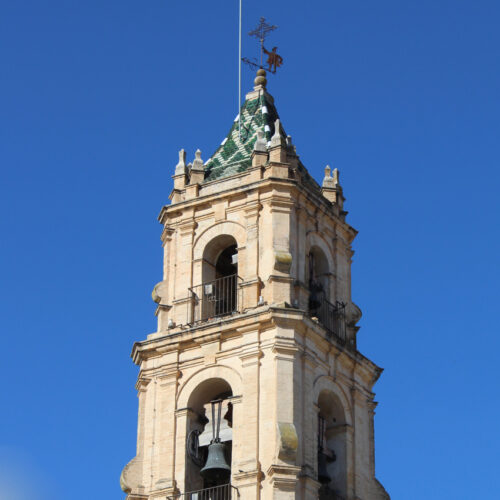
Located at the top of Baena, Saint Mary the Major may stand on the site of an ancient mosque, as suggested by its tower, possibly a 9th-century minaret. Although the current building follows a Gothic-Renaissance style, elements such as the exceptional Plateresque grille and decorative details preserve echoes of the Andalusian legacy — a testament to the dialogue between cultures that shaped the urban history of Bayyāna.
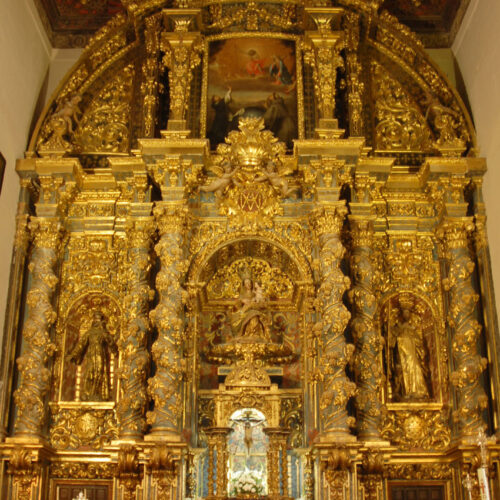
On a site that may have had a strategic or religious use during the Andalusian period, the Dominican convent of Our Lady of Guadalupe was built in the 16th century. Its Mudejar coffered ceiling in the main chapel, unique in the province, demonstrates the survival of the Islamic legacy within Christian sacred architecture — a testament to cultural continuity after the conquest.
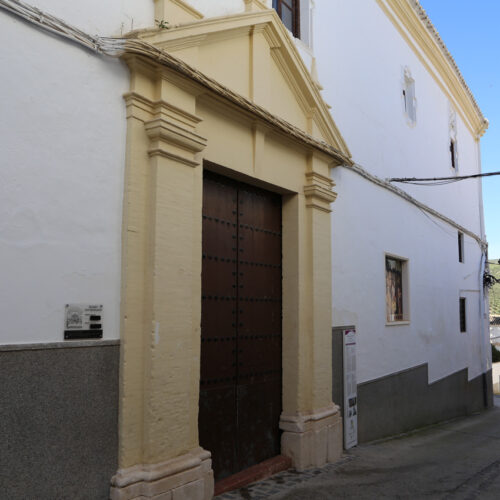
Built in the 17th century, the church stands in an area of Baena with deep Andalusian roots. Although its style is Baroque, it preserves structural and decorative features that recall the Islamic legacy, such as its single nave and mural ornamentation. Its foundation marked the Christian transformation of a former Islamic urban setting.
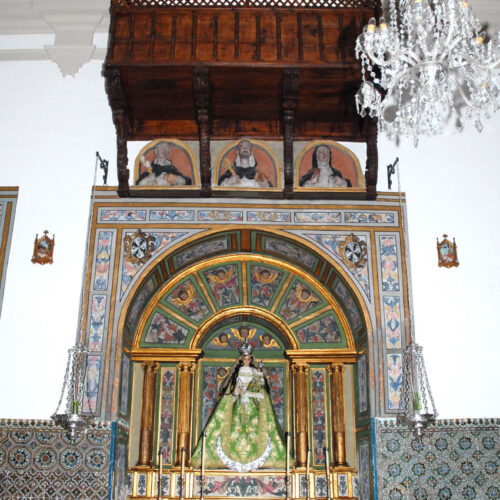
Founded in 1510, the Dominican convent stands in the former Andalusian core of Bayyāna. Although Renaissance in style, it preserves Mudejar elements such as the wooden ceiling (alfarje) and the trilobed arch, a testimony to the survival of Islamic art in religious architecture after the Christian conquest.


