


A journey through the living memory of the towns of Al-Andalus in the Guadajoz region of Córdoba
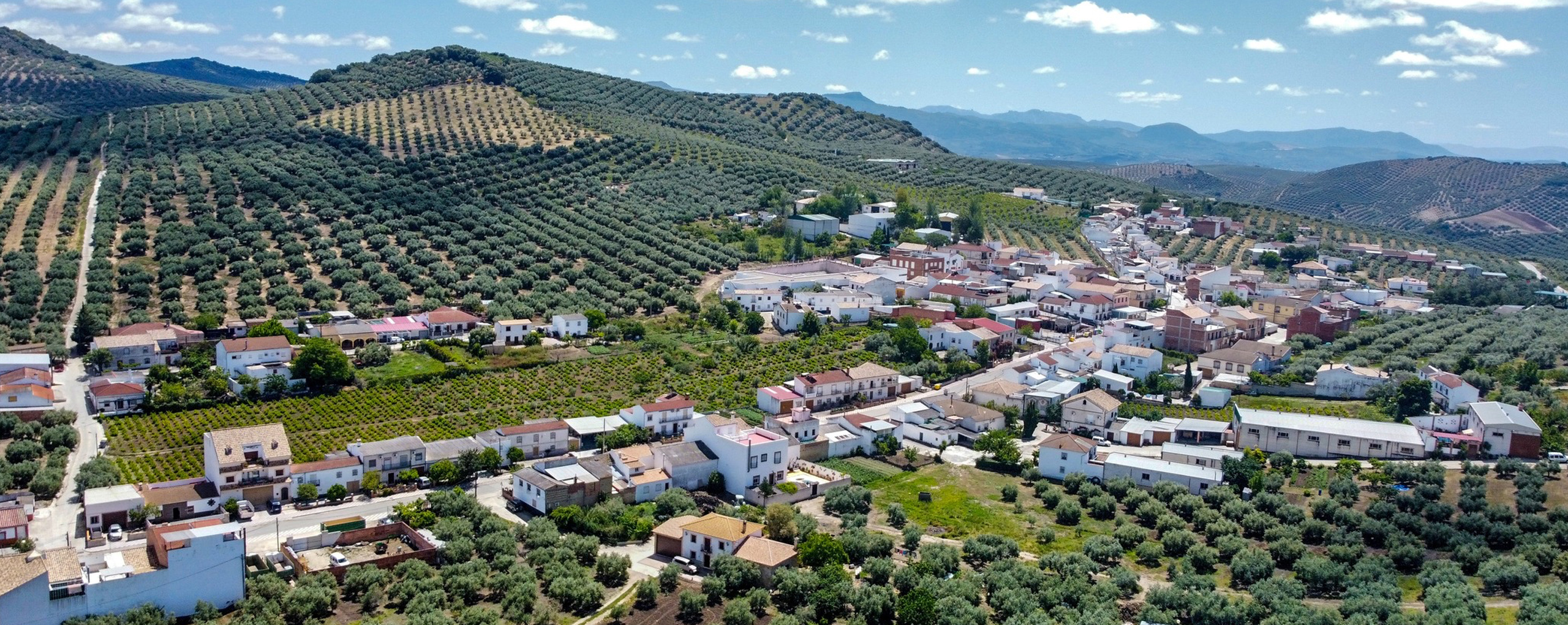
They left the streets of the neighborhood behind and exited the town along a dusty path that opened between small orchards and olive groves.
After a while, in the distance, a small estate appeared, surrounded by trees and enclosed by a low stone wall. The bleating of a goat and the rhythmic tapping of wood could be heard. Mixed with those sounds, the breeze carried the unmistakable aroma of something frying in good oil.
—This place… —murmured Carmen, a sudden look of recognition on her face—. It’s Llano del Espinar. Of course. I didn’t recognize it from afar, but now I do.
A middle-aged man, with weathered hands and a kind expression, came out to greet them at the courtyard gate.
—Muqaddam, brother!— Qāsim greeted him with a sincere smile as they embraced—. How long it has been!
Muqaddam nodded warmly.
—Too long, Qāsim. It was about time.
—This is Carmen —Qāsim added, turning to her—. She comes from very far away. Farther than you can imagine.
—Welcome, sister —said Muqaddam with a smile and eyes alight with curiosity—. Come in, come in. Lubna is just finishing frying the last ones.
At that moment, a woman came out from the kitchen carrying a steaming dish in her hands.
—I don’t know why, but today I felt I should prepare a little extra food… and look at that.
It was Lubna, with a kind face and steady hands. She gave them a gentle smile and led them to the porch, where a low table covered with a simple cloth awaited in the shade of the dry reeds. There she set down a dish of small, golden, steaming meatballs, alongside a jug of cool water scented with mint leaves.
—Chicken balls with pistachio, breadcrumbs, a touch of cinnamon, and ground cilantro —said Lubna as she placed the plate in the center—. But the secret lies in the olive oil we prepare right here.
Muqaddam nodded with pride.
—And no invitation is needed to sit. Come, eat while it’s hot.
After blessing the food with a brief “Bismillah,” Carmen picked one up with her fingers, dipped it in a little lemon juice, and tasted it with an expression of surrender.
—I don’t know if I’m in the past… or in heaven. You know, in my time, Castro del Río is famous for codfish, a fish from distant seas.
Lubna looked at her in surprise.
—Truly!—Carmen exclaimed—. It has become a symbol of the local cuisine. Every year a codfish food festival is held, drawing people from all over: there are competitions, wines, traditional products… A whole celebration.
Lubna smiled as she dipped one of the meatballs in lemon.
—That’s good —she said at last—. Recipes change, but what always remains is the desire to eat well.
In the garden before them, Muqaddam’s children played on the ground with small wooden dolls. Carmen watched them with a smile, surprised by the delicacy of the figures.
—How beautiful… where are they from? —she asked curiously.
—We made them together, in the workshop. Sometimes we work… and other times we play at working.
He leaned back slightly on the bench, his manner calm.
—Here we live from what the olive tree gives us —.said Muqaddam with serenity—. I work the wood and sell it to the local people; some even come from other alquerías just to order furniture or collect oil. The oil mill is just behind us, next to the oldest olive trees. It isn’t large, but it’s enough. We use a beam press, as our grandparents did: the key is to treat the fruit well and let time do its part.
Carmen noticed a corner of the workshop, where a carpenter’s bench rested, tools hung neatly on the wall, and a couple of pieces were in progress: a chair and a small chest.
—In my time, Castro del Río is still renowned for olive wood. Even today, olive-wood furniture is crafted and sent to distant corners of the world. The best pieces are made from old wood, from trees that no longer bear fruit. They bury it in soil or sand for months to rid it of woodworm, and then they work it with bulrush.
Muqaddam looked at her with a mixture of surprise and satisfaction.
—Then it seems good craftsmanship has managed to stay alive. If we allow that to be lost, we lose more than just a system of production: we lose our roots.
Qāsim said nothing. He ate slowly, his eyes calm, as if everything in that courtyard—the food, the sun, the scent of orange blossom in the garden—was exactly as it ought to be.
Carmen lifted her gaze toward the olive fields.
—How curious. One travels centuries back to discover the past… and finds what the future ought to be.


