


A journey through the living memory of the towns of Al-Andalus in the Guadajoz region of Córdoba
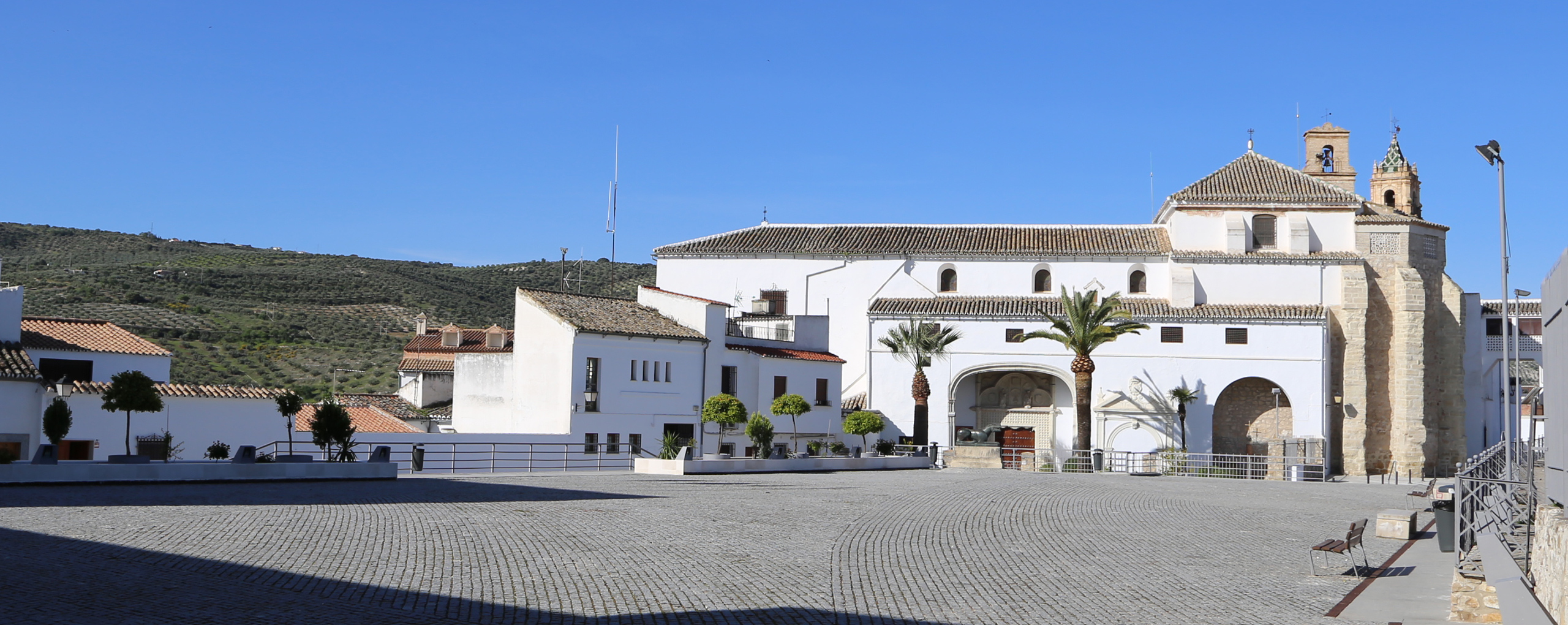
The afternoon sun fell over the slopes covered with olive trees as Qāsim and Carmen reached the top of a hill. A white patch of houses spread across the hillside, crowned by the silhouette of an ancient fortress.
—There lies Bayyāna —said Qāsim, stopping beside a rock and raising his hand—. ‘A great fortress upon a rise of the land,’ as al-Idrīsī described it centuries ago. Like a watchful sentinel among wheat fields, fig trees, and olive groves.
He paused briefly, then added with a half-smile:
—This is where I was born. And though my paths took me far— to Córdoba, to Baghdad, even to Mecca— I have always carried Bayyāna with me. For this is my land.
Carmen looked on in silence. The narrow streets that descended from the heights seemed to flow like veins between whitewashed façades, disappearing among uneven rooftops.
—All of this is the Almadīna —Qāsim said—. The heart of the city. Walls on all four sides, with a castle at the top and, below, the houses, the workshops, the mosques… From here the river is controlled, as well as the roads that lead to the countryside and the lands to the east. It is a key point, both for trade and for war.
—Now it is called the neighborhood of ‘La Almedina,’— Carmen commented—. Some stretches of wall still remain, along with old gates, and there’s even a tower with a Mudejar art hall.
—I am glad that a place like this still preserves its soul —said Qāsim—. Here life was woven in our time: the souk, the bread ovens, the oil mills, the school of memory and letters… It even became the capital of the cora of Cabra and had its own administrative district.
—And in my time, once a year, all of this changes completely— Carmen added, looking around—. During the Tamborada, the Almedina is transformed: hundreds of drums sound in unison, as if the whole town suddenly awoke. Men and women dress in black or white tunics, and for hours they beat their drums through the streets while the town trembles in an explosion of collective emotion.
—And what is celebrated?—asked Qāsim, gazing at her with curiosity.
—It’s part of Holy Week, when the Passion and Death of Christ are commemorated—Carmen replied—. But beyond the religious aspect, it’s a collective expression that transcends age, belief, or ideology. The sound of the drum is memory, identity… even catharsis.
—How wonderful —said Qāsim—. As you see, in Andalusi times the sounds were different: the call of the muezzin at dawn, the Friday prayers, the hammering of the coppersmiths, the murmur of storytellers in the souk at dusk… But if there is still something that makes the hearts of those who live here beat in unison, that means Bayyāna is still very much alive.
They walked along a cobbled street, and soon it opened into a small square: there was a fountain at the center, stone benches, and a few oil lamps flickering in the breeze. Beneath a flowering vine, a group of men and women listened in silence to a young man who stood reciting, his voice firm, his eyes closed.
—Here we recite poetry —Qāsim said softly, without interrupting—. Not in great halls of cold marble, but in the open air, enjoying tea and the music of the lute in the background. Some improvise zéjeles; others repeat muwashshahs learned by heart. Love, faith, desire, satire… everything has a place.
The final verse drew a gentle smile from the crowd and a restrained applause. The reciter bowed his head humbly, while another among the listeners was already rising, clearing his throat to take his turn.
Carmen stepped a little closer to Qāsim and murmured, almost to herself:
—This reminds me of the Cancionero de Baena. Though it was composed centuries later, it also gathers verses like the ones we hear here.
Qāsim looked at her curiously.
—The Cancionero de Baena?—he asked.
—Yes —Carmen replied—. It’s a book that collects that tradition of both popular and learned poetry. Without Andalusi influence, it wouldn’t be the same.
—So in Bayyāna not only stones endure, but verses too —said Qāsim with a smile.
They continued walking, and as they turned a corner, Carmen pointed to a lookout from which part of the plain could be seen.
—You know? Somewhere down there —she said —a Caliphal treasure hoard was found. Silver coins, dirhams. They say it was hidden during times of unrest, perhaps when Almanzor died.
—A hidden treasure, troubled times. No need for much explanation,” Qāsim murmure—. And in troubled times, nothing is more valuable than a strong defense.
He lifted his staff slightly, pointing upward.
—The castle is near. Come. I’ll show you why it is one of the most imposing fortresses in the entire Guadajoz region.
The path zigzagged among whitewashed houses. Some displayed dark wooden gates, others iron grilles draped with hanging flowerpots. On the corners, artisans sold their wares: baskets full of figs, pitchers brimming with fresh water, glazed ceramic pieces neatly lined up against whitewashed walls. The air carried mingled scents of freshly baked bread, warm spices, and worked leather.
They began the climb toward the castle.
—These stones have seen wars, haven’t they?—Carmen asked.
—Indeed —Qāsim replied—. Its position was no accident. This place was already strategic in the 9th century. ʿUmar ibn Ḥafṣūn, the rebel who rose against Córdoba, seized Bayyāna. From here he defied the emir and extended his influence throughout the countryside. It became necessary to reinforce the defenses. The hill turned into a stronghold.
They passed through one of the gates and entered the interior of the structure.
—The fortress is square and powerful —he continued —with solid towers of rammed earth and masonry. Some, like the northeastern one, may date back to even earlier times. There is a gate leading out to the countryside, another connecting to the almedina, and several towers guarding each corner. The Tower of Secrets protects one of the most important entrances, and in the southwest corner rises the great keep. From its top, everything can be seen: the town, the roads, the olive groves… even the distant sierras on clear days.
Carmen swept her gaze around the perimeter.
—In my time, only a few stretches of wall and three towers remain: the Tower of Secrets, the Tower of Bells, and the Archers’ Tower—she said—. Over the centuries, the castle was gradually altered. In the 16th century it passed into the hands of the dukes, and it slowly became a palace. They opened new windows, added rooms, covered courtyards, and built domestic quarters. Defense became secondary.
—That is what happens in times of peace —said Qāsim—. It is a good sign.
—Even so —Carmen continued —the castle remained a witness to great moments throughout its history. Gonzalo Fernández de Córdoba, the Great Captain, was once held prisoner here. Later, the Catholic Monarchs slept within its walls. And in the time of the civil war, they even built a bunker inside the fortress.
The evening light caressed the whitewashed façades, while a warm breeze carried the earthy scent of the countryside.
—Come —said Qāsim, pointing to a narrow descent between whitewashed walls—. We have not yet seen the soul of Bayyāna in its entirety.
They went down a stone street and soon reached an old gate in the wall. The structure was simple, with a semicircular arch and walls reinforced with rows of brick. To one side stood a tower of modest proportions, yet bearing the imprint of ancient times.
—Is that the famous Torreón del Arco Oscuro?—Carmen asked, recognizing the structure.
—That name must have come much later, but I am glad to know it still survives in your time —Qāsim replied—. This tower was one of the entrances to the fortified enclosure. Notice this bend: you cannot pass through in a straight line. This prevented anyone from charging in on foot or horseback. A discreet defense, made with intelligence.
They passed through, and a little further on the walls of a beautiful building emerged among the streets.
—The Great Mosque of Bayyāna —Qāsim said, his gaze deep and full of memories—. The heart of the community.
The façade was sober, of limestone and rammed earth, and the harmony of its lines and the dignity of its presence inspired respect.
The mosque’s courtyard opened to the sky, surrounded by simple arcades and columns that cast fine shadows across the pavement. At its center, a fountain released a steady stream of water into a stone basin, where several men washed their hands, faces, and feet with composed gestures.
—It was built in the time of ʿAbd al-Raḥmān II —Qāsim said softly, as though unwilling to disturb the scene—. Not only for prayer, but also as a place of gathering and the transmission of knowledge. A center of social and communal life.
At the far end, from the base of the square tower, rose the long notes of the muezzin’s voice. The faithful, in small groups, slipped quietly toward the prayer hall.—The minaret is on the north wall—said Qāsim — pointing with a slight gesture—. It is not especially tall, but its purpose does not depend on height. The call can be heard from the souk, and when it begins, everything around it seems to step aside.
Carmen watched the calm movement of the men entering and leaving the prayer hall, wrapped in the serene stillness of the mosque.
—It still amazes me to think that this place, centuries later, will be a church —she murmured—. The prayers will change, the stones will be covered with plaster and altarpieces… but the building will still stand, welcoming the faithful. The minaret, for example, is said to remain hidden beneath the baroque tower that rises in my time.
They stopped beneath a side portico, where an old man was teaching children seated on the floor. They recited softly, repeating verses that barely broke the murmur of the water.
—As a child, I would sit like this, cross-legged, learning from the wise —said Qāsim—. Learning from the elders is a privilege one values more with age.
They stepped outside the mosque and remained in silence for a moment.
—Come —Qāsim added then—. There is another place I want you to see, older and more solitary.
They left Baena and followed a path that rose among rolling fields until they reached a rocky hill crowned by stone walls and a solid tower with rounded corners. From there, it commanded the countryside like an unmoving sentinel.
As they drew closer, the outline of the fortress became clearer: smaller towers flanked the entrance, and an access corridor ran along the eastern wall, guarded by arrow slits.
—This is the Ḥiṣn that protects the eastern borders of the Caliphate —said Qāsim—. A frontier bastion guarding the roads between al-Qabriyyīn and Bayyāna. But not all the stones were laid by us. This structure rises on ancient ruins, so old that even the elders know them only through legends.
Carmen looked at him in awe.
—Then… this is Torreparedones —Carmen murmured, finally recognizing the place she had so often visited in ruins, now alive and full of meaning.
Inside the enclosure, they crossed the parade ground. To one side, the hammering of a blacksmith rang out; farther on, a woman drew water from the cistern while children played between the stables and the kitchens. The castle vaults looked solid, the towers were joined by battlements, and a breeze moved the banners slowly.
—And who rules here?—Carmen asked, studying the walls reinforced with ashlars.
—A walī in the service of Córdoba, though it was not always so. This hill has had many names and many lords. The Iberians built up to three walls here; later the Romans arrived and left their mark in the form of columns, foundations, and tombstones. Even in the cistern—he pointed to the rectangular structure with a reddish lining—urns with Latin inscriptions were found; the most famous belonged to the family of the Pompeys.
Carmen leaned slightly, as if searching in the depths of the cistern for a distant image.
—Today the castle lies in ruins —she said calmly —but this entire hill has been rescued from oblivion. It is one of the most important archaeological parks in Córdoba. The tower still stands, and now visitors walk among Roman roads, ancient temples, and remains like this still-imposing castle.
Qāsim smiled faintly.
—As long as the stone endures and there are people willing to care for it, this wonder will remain alive.
Carmen turned her gaze toward the tower, trying to imprint the beautiful structure into her memory.
—It is time to continue— said Qāsim, breaking the silence gently—. I still want to show you something that transformed our way of cultivating this land.


