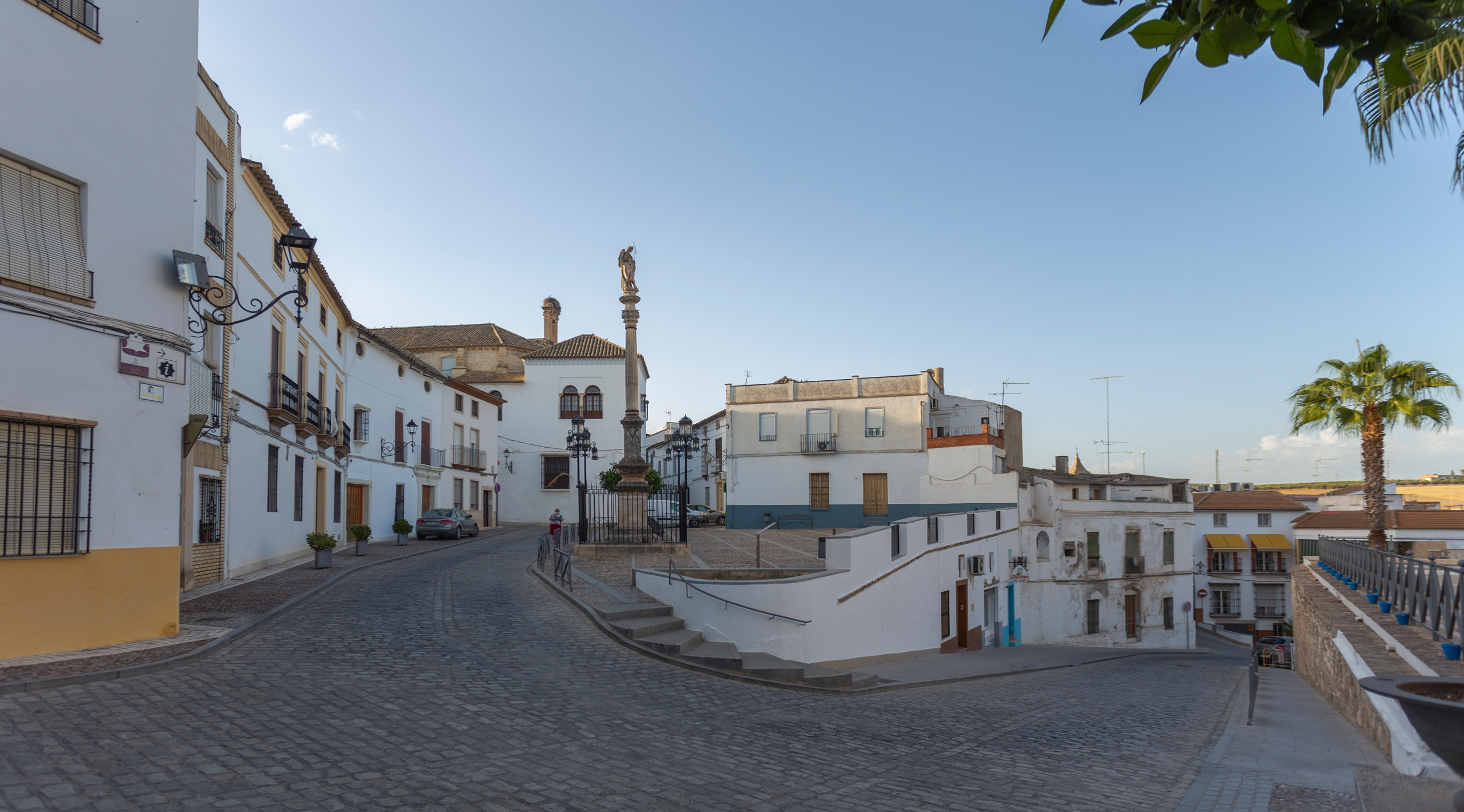
Castro del Río preserves a valuable cultural heritage that reflects centuries of history, with a strong Andalusian imprint that shapes its urban layout, architecture, and traditions. The irregular design of its streets, the adaptation to the terrain, and the presence of elements such as inner courtyards, whitewashed walls, and defensive structures speak of a past in which the Islamic medina was the central axis of local life.
Over the centuries, this heritage has been enriched with Christian and Baroque contributions, forming an urban ensemble full of nuances and unique identity.
Villa Quarter
It is the oldest part of Castro del Río and preserves the urban structure inherited from the Andalusian medina. Its narrow, irregular streets, adapted to the terrain, reflect Islamic urban design focused on functionality and defense. The castle-fortress once stood here, and sections of the walled enclosure and later manor houses built upon Islamic foundations can still be seen. The quarter has been declared a Site of Cultural Interest and represents the historical heart of the town.
Municipal Granary
Built in the 16th century and expanded in later centuries, the Granary was a key building in the economy of Castro del Río. Its function was to store grain to ensure supply during times of scarcity and to provide loans to local farmers. With a sober and functional style, the building combines elements of Renaissance civil architecture with later adaptations. Its current preservation makes it a valuable example of the town’s economic and institutional heritage.
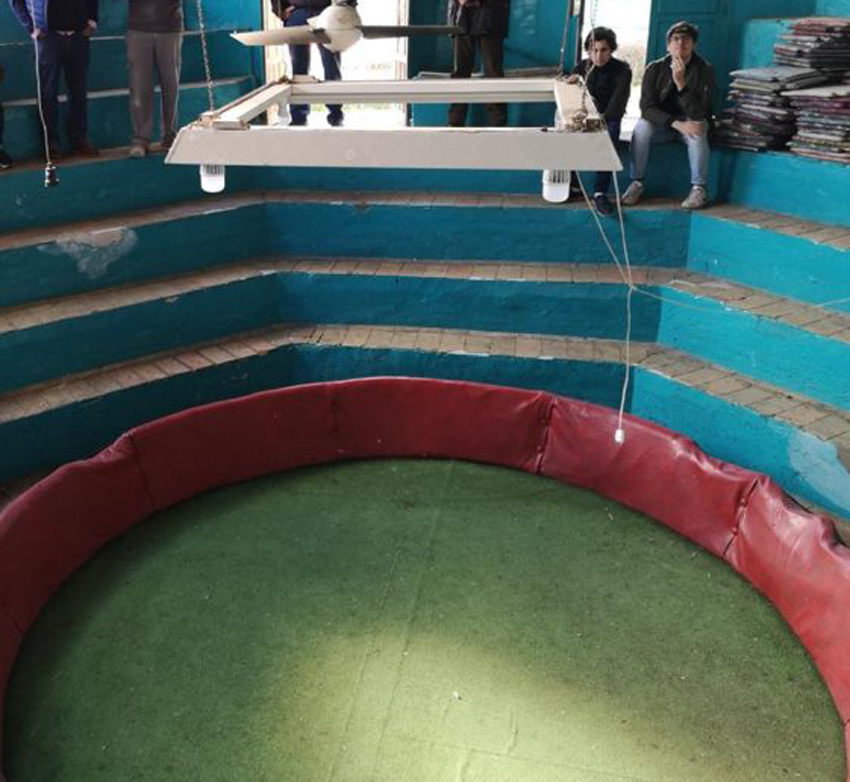
Cockfighting Ring
A unique space within the cultural context of the municipality, the Cockfighting Ring of Castro del Río is one of the few still preserved in Andalusia. It is linked to a popular tradition deeply rooted in the Cordoban countryside. This type of enclosure, generally circular in shape with seating for spectators, was used for cockfights, especially during patron saint festivities. Although its use today is minimal, the site remains part of the town’s collective memory.
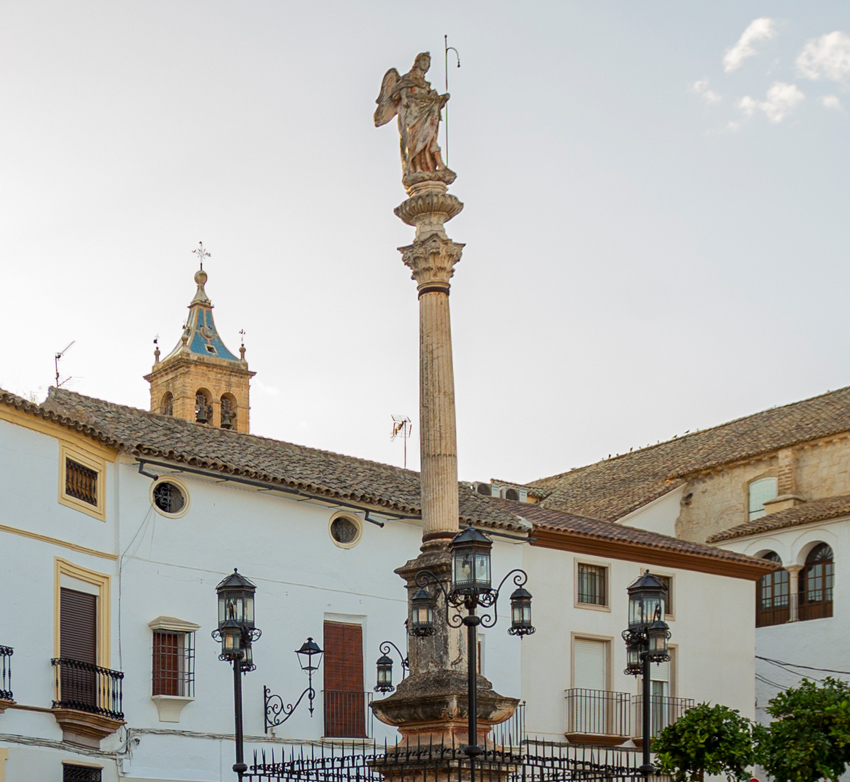
Triumph of Saint Raphael
As in other parts of the province of Córdoba, Castro del Río has a monument dedicated to the Archangel Saint Raphael, the city’s protective symbol since the 17th century. The local Triumph is an example of Andalusian Baroque devotion, represented by a column crowned with the figure of the archangel. This expression of popular faith connects the town with a tradition that extends throughout the Cordoban territory, integrating religious devotion into the public urban space.