The Fountain of the Slaughterhouse is located in the southern part of Espejo, next to the old municipal slaughterhouse from which it takes its name. Its structure is simple, featuring a spout that pours into a rectangular trough made of masonry and plastered, which for decades served as a water supply point for the neighborhood and, above all, for the livestock brought to the slaughterhouse.
Before the arrival of running water, this fountain was part of the network of essential hydraulic resources for the town’s daily life. Although it has lost its original function today, it remains a significant vestige of Espejo’s hydraulic heritage and of the way of life prior to the 20th century.

The Fuensanta watering trough, located about 2 km from Espejo, was for centuries a vital point for obtaining water. Its waters, drawn from an ancient Roman cistern, were considered to have healing properties. In the 16th century, a hermitage dedicated to the Virgin of Fuensanta, the local patron saint, was built above it, turning the site into a place of worship and popular gathering, especially during the pilgrimage held on September 8. This watering trough reflects the historical and symbolic importance of water in the daily life of the people of Espejo.

The Espejo Cistern, located 1 km from the town along the ancient Roman road to Obulco, is a water reservoir built around 45 BC, possibly over a former Turdetanian place of worship. With a square plan and a vaulted roof pierced by oculi, it was constructed by Caesarian soldiers and formed part of a Roman hydraulic network that supplied the city of Ucubi. From it, an underground gallery carried water to the Aljibe Fountain. Excavated and restored in 1988, it stands as a living example of Roman hydraulic engineering.
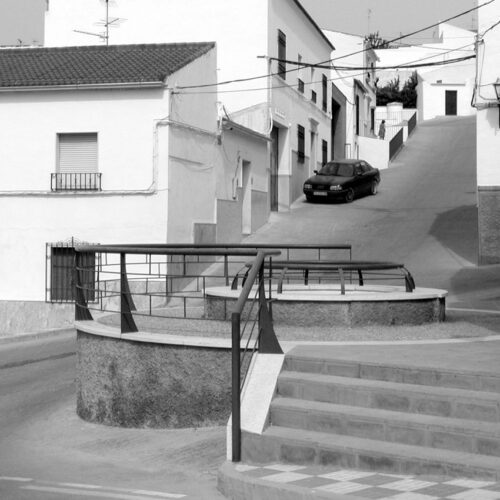
The Mármol Well, located in the urban center of Espejo, is one of the many historic wells that supplied the population before the arrival of running water. Although not drinkable, it served the community alongside others such as the San Roque Well or the now-disappeared San José Well. Espejo once had an extensive network of wells and fountains — such as the Fuente Nueva, the Pilar Salado, or the cemetery well — used for domestic consumption, washing places, and watering troughs. Also noteworthy are the Mina and La Alcubilla springs, which provided drinking water, along with many others scattered throughout the municipality, reflecting a constant struggle for access to water.
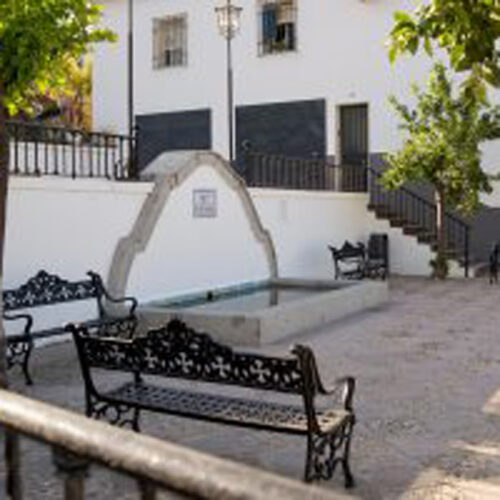
The Pilar Salado, located in the northern part of Espejo, owes its name to its brackish waters. It was one of the few available fountains in a town historically marked by the scarcity of drinking water. As early as the 17th century, records mention urgent repairs funded by local residents during a severe drought. Its existence reflects Espejo’s long-standing difficulties in securing a reliable water supply.
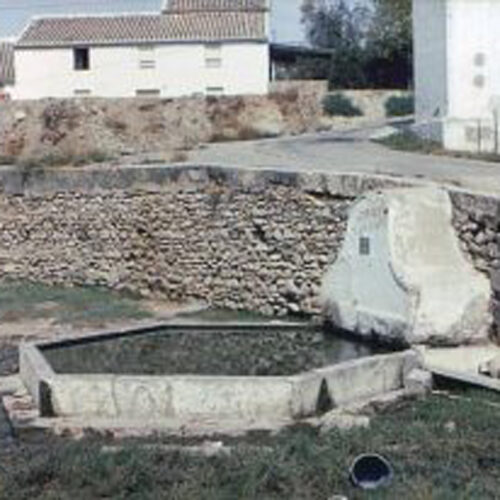
The Fuente Nueva, located in the Alcaparral area next to the N-432, was for centuries an important water supply point for the inhabitants of Espejo. Already mentioned in the 19th century by Ramírez de las Casas-Deza, it served key functions as a washhouse, watering trough, and drinking fountain.
Its current structure consists of a trapezoidal basin and a masonry wall with a spout that pours water into the trough. Like many other traditional fountains, its use has declined over time, though it remains a testament to the historical bond between human settlements and water.
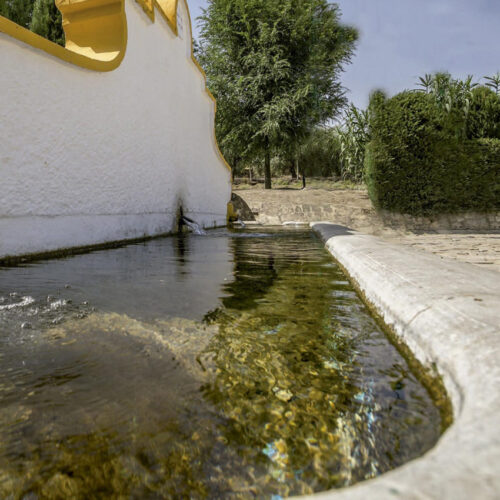
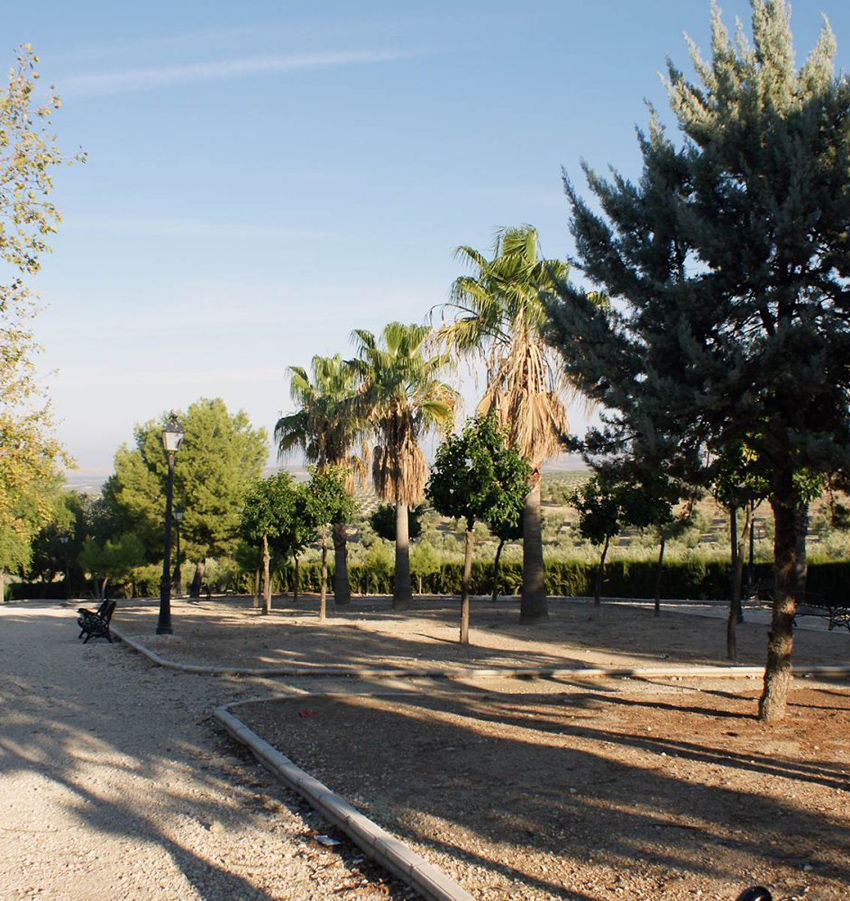
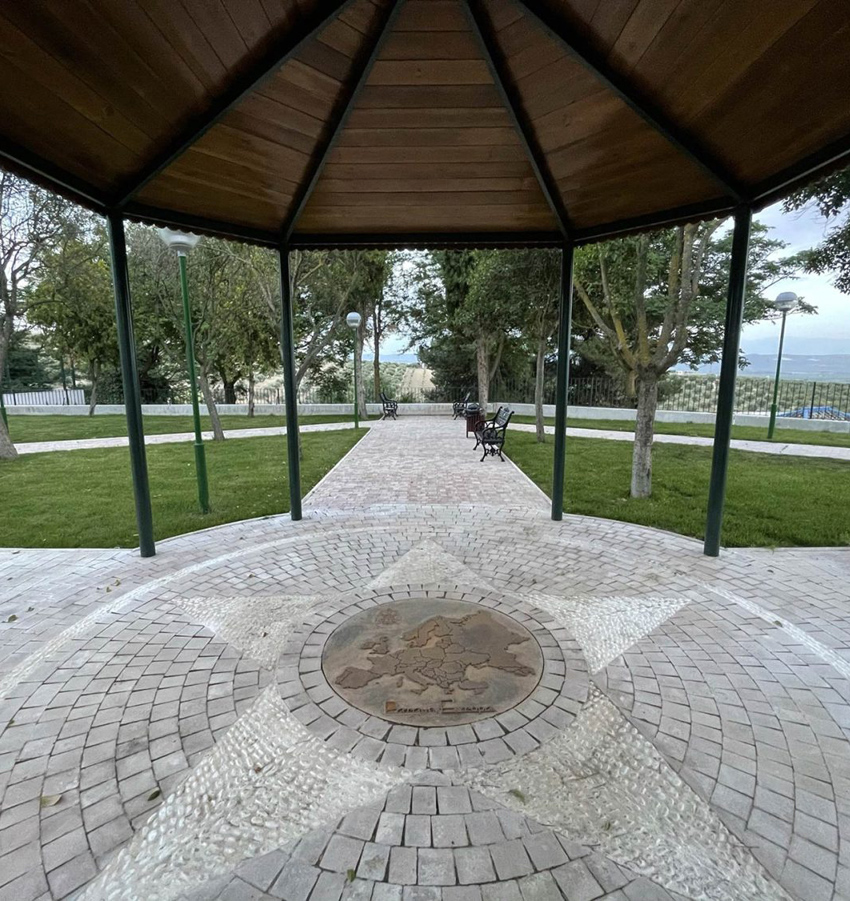
About 4 km from Espejo, along the road to Nueva Carteya, lies the peri-urban park El Borbollón, a natural area surrounded by olive groves and freshwater springs, ideal for enjoying nature.
This site has been inhabited since prehistoric times, as evidenced by remains of polished stone axes. It was once one of the most abundant springs in the province and supplied water to the town for decades, until water from the Iznájar reservoir began to be used.
The architectural ensemble is notable for its Baroque pediment with four spouts that pour water into a masonry trough. The excess water is channeled into a stream that originates from this spring, known as the Borbollón Stream.

In Espejo, the scarcity of large watercourses has made it necessary to rely on fountains such as the Tejadilla Fountain, located next to the N-432. This fountain has historically supplied drinking water to the population and nearby crops.
The fountain has a single spout that emerges from an underground masonry conduit, pouring into a rectangular trough connected to a square basin. From there, the water is channeled toward the nearby Tejadilla farmhouse.