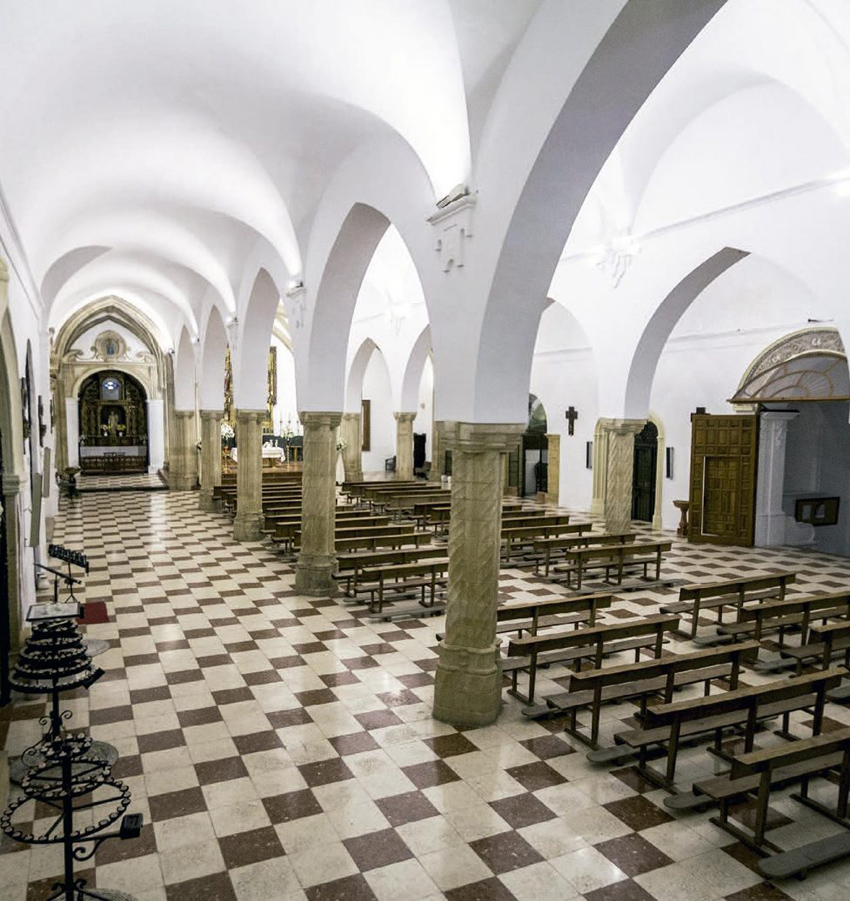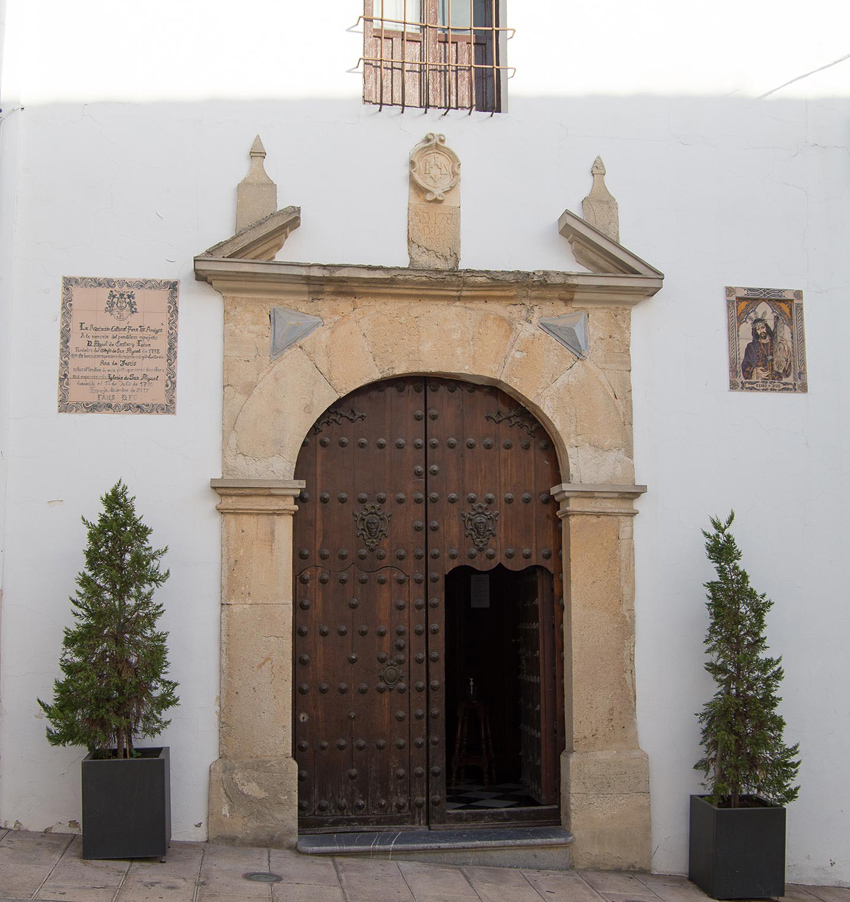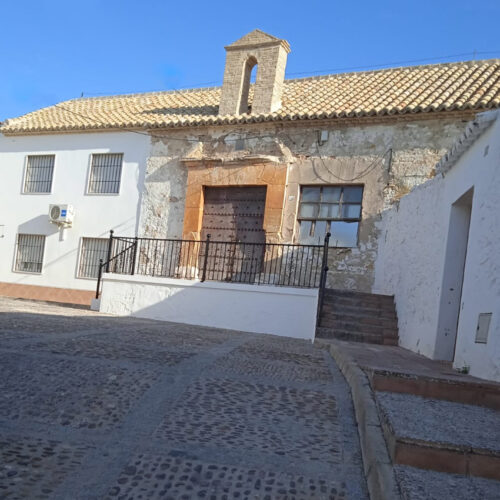
Built in the 17th century and expanded in 1784, it is a single-nave building with a lowered dome on pendentives over the main chapel. The expansion was financed by Don Manuel de Gracia, who promoted the creation of a spacious side chapel dedicated to the saint.
Its sober stone lintelled façade and upper bell gable, now without a bell, stand out. Although it is currently closed for worship, the hermitage preserves its heritage value within the historic complex of Espejo.
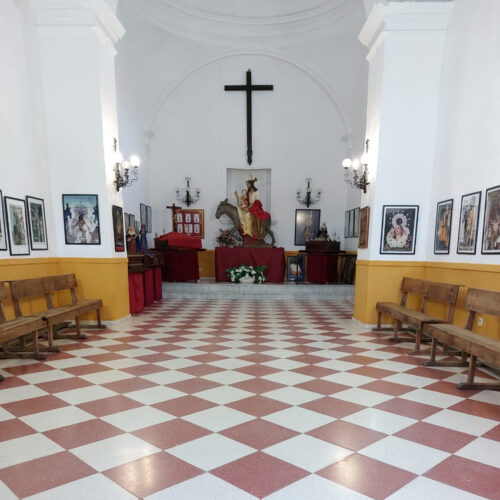
Located in the northwest of Paseo de las Calleras, it stands out for its simple whitewashed façade crowned by an iron cross. Its origin dates back to 1612, when the brotherhood of the same name promoted its construction. After two centuries of use, the building was rebuilt in the 18th century due to its poor condition, and in 1810 it was blessed as an auxiliary church of the Parish of Saint Bartholomew.
At the end of the 19th century, it was restored again thanks to the priest Trinidad Comas, who converted it into a Catholic school. After the Civil War, it served as a National Nursery School until its closure in the 1960s. Despite its changing uses, the hermitage remains an architectural landmark within the urban landscape of Espejo.

Located on the southeastern edge of Espejo, it was probably founded in the first half of the 16th century. From its beginnings, it housed a chaplaincy dedicated to worship and the teaching of Christian doctrine, reflecting its importance in the town’s religious life.
Over time, in addition to being a place of worship, it also served as a school from at least the 18th century and was restored for that purpose after falling into ruin in the 19th century. Although today its spiritual function is limited, its original sober façade is still preserved, and the hermitage remains a popular symbol that gives identity to one of the town’s most traditional neighborhoods.