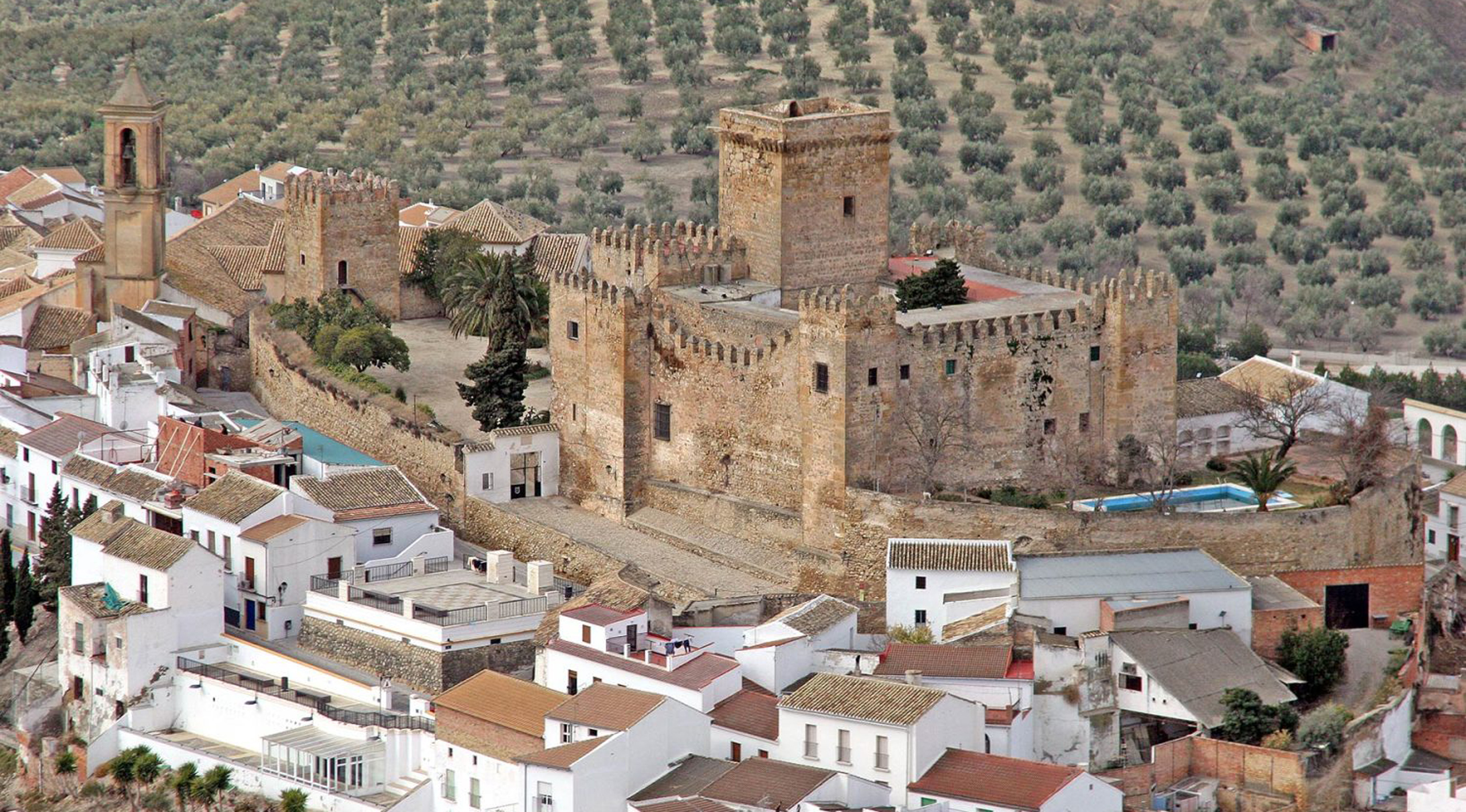
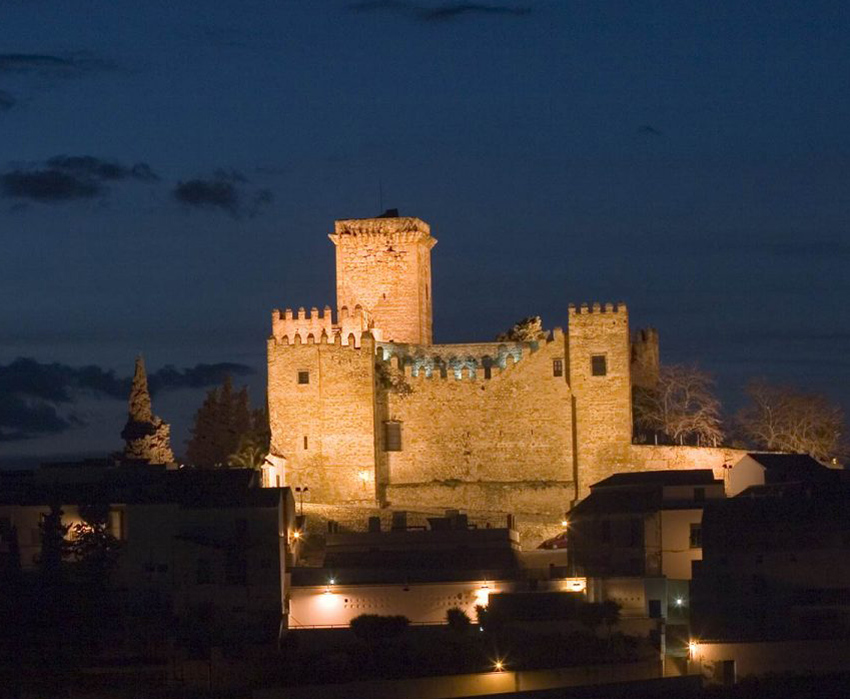
At the highest point of the town, overlooking the Cordoban countryside, stands the Castle of Espejo, also known as the Castle of Alcalat, a name that refers to its Andalusian origin (al-qalʿa, “the fortress”). It is the most representative monument of the town and a key testimony to its frontier past.
During the Islamic period, the site was a strategic position within the defensive system of the Cora of Córdoba, probably serving a dual function: controlling the territory and providing refuge for nearby farmsteads. After the Christian conquest in the 13th century, the fortress was expanded and transformed by the Pay Arias family, and later passed into the hands of the House of Osuna, which gave it its current appearance.
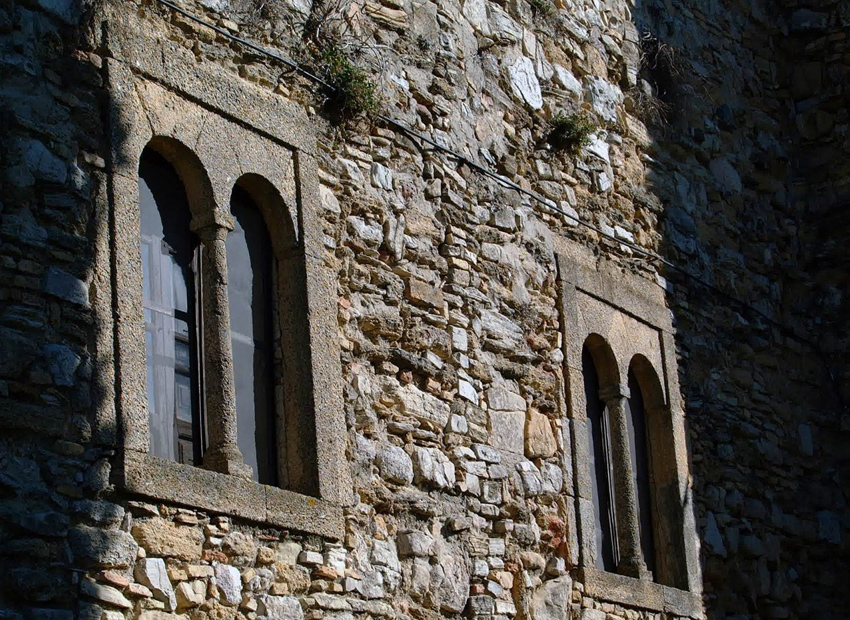
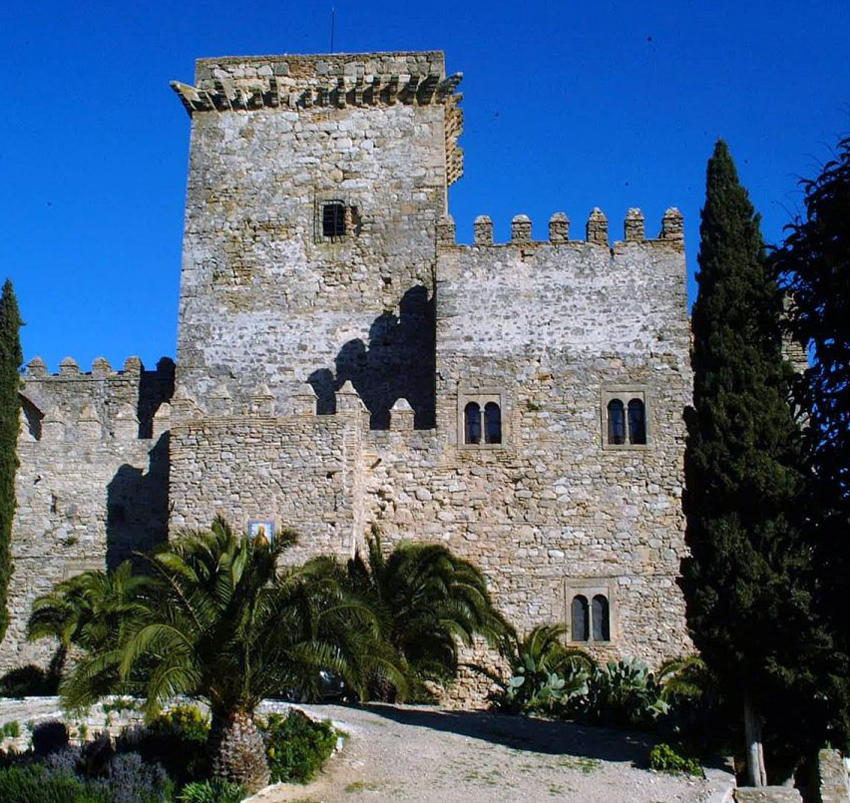
The structure, almost square in shape, is flanked by four corner towers connected by a wall-walk with a battlemented parapet and cubic merlons made of masonry and brick. Notable features include the solid and massive Keep Tower and the Knight’s Tower, which protects the southern flank of the old parade ground or albacar. On its main façade stand out elegantly designed twin windows, an unusual element in a building of military character.
The castle also preserves a central cistern and an underground gallery, probably of medieval origin, which local tradition associates with the legendary Moorish Queen and her path toward the ancient Roman site of La Albuhera.
Over the centuries, the fortress was adapted for residential use without losing its imposing presence. Today, the Ducal Castle of Espejo is open to the public, and guided tours are available through the company Córdoba Viva.