


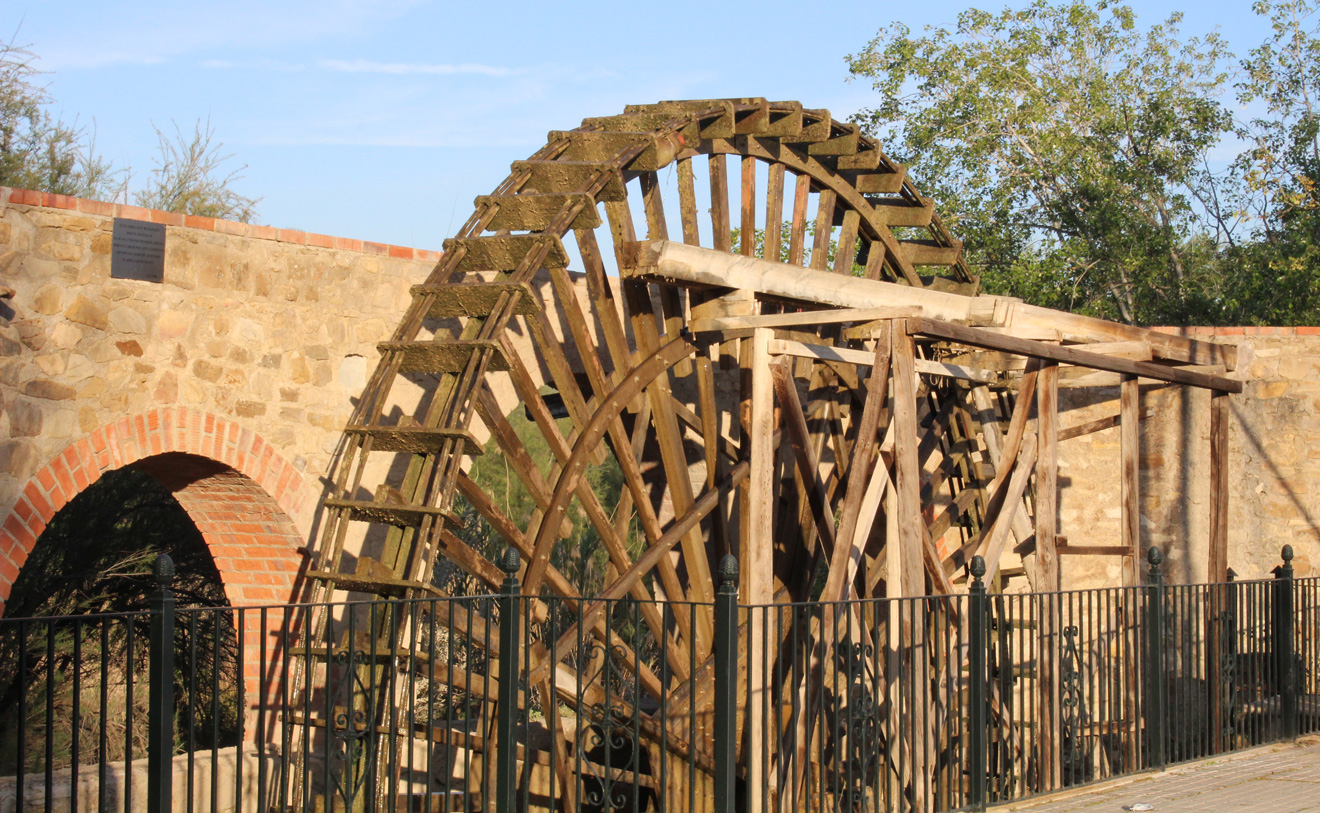
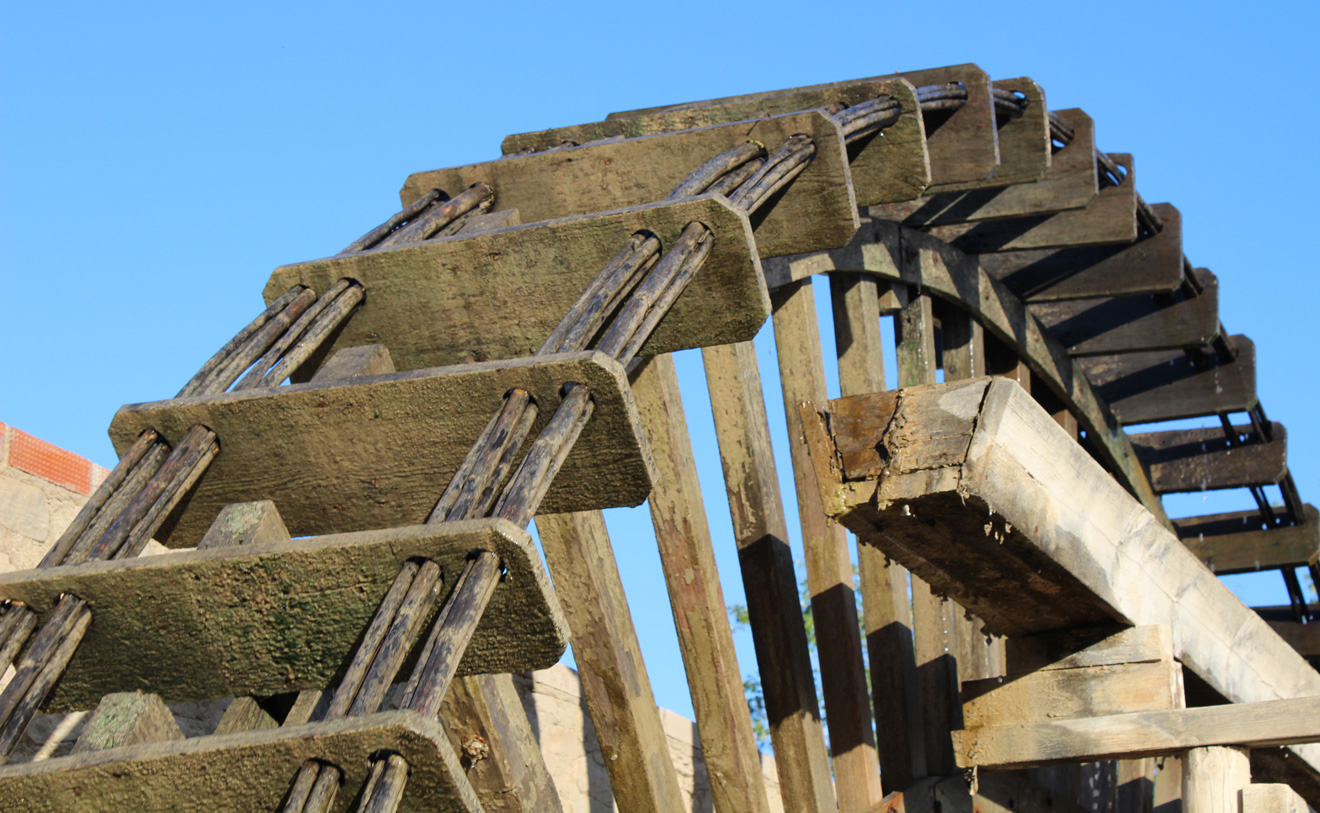
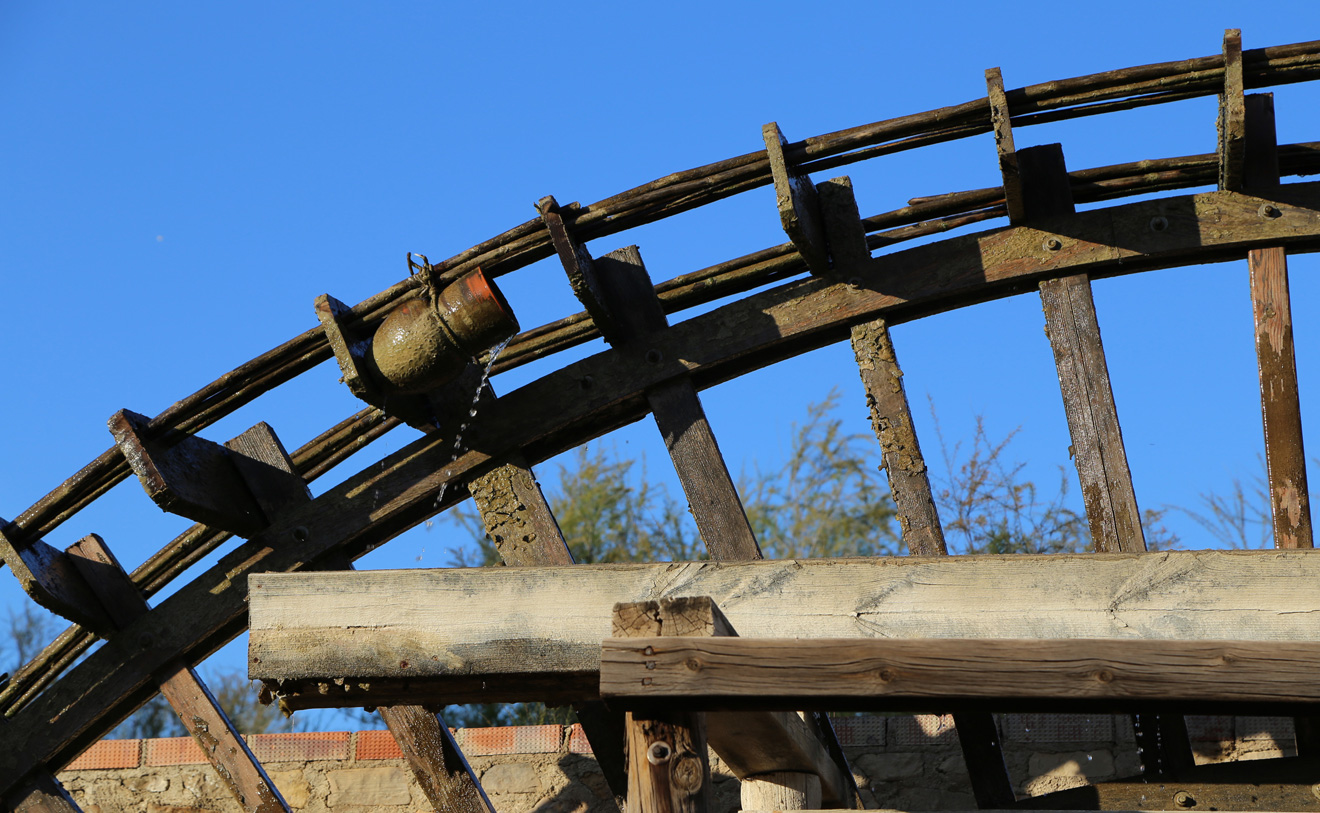
The waterwheel of Albendín evokes the advanced hydraulic system developed during the Andalusian period. These waterwheels, known as “na‘ura,” were large lifting wheels powered by animal traction or the force of water. They were used to supply orchards and farmsteads through irrigation channels, a common practice in the lands of the Guadalquivir during Islamic rule.
This particular waterwheel is a didactic and ornamental example of that technical knowledge, demonstrating how Andalusian agricultural engineering remains alive as part of the landscape and cultural memory of Albendín.
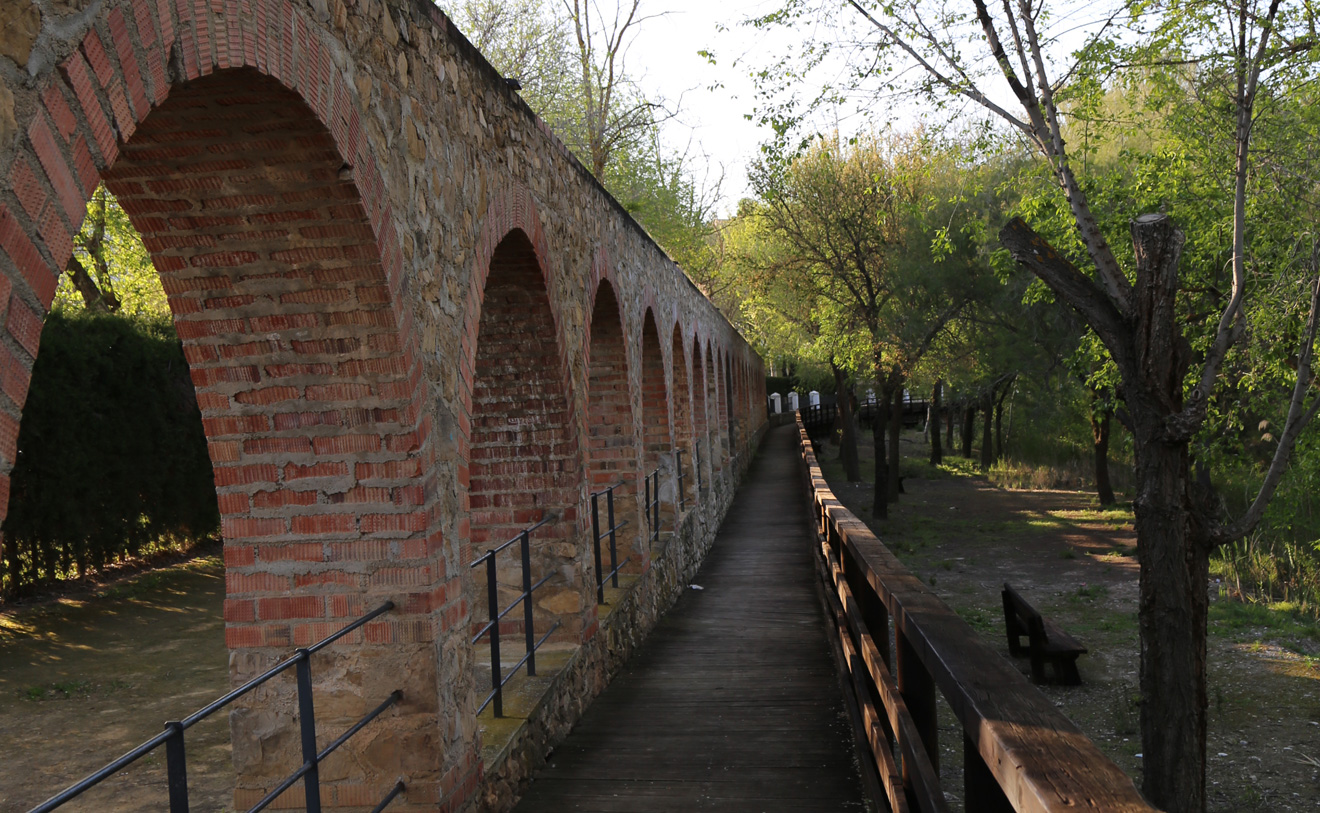
Located in the Municipal Park of Albendín, the waterwheel blends into a landscaped setting that offers residents and visitors a space for relaxation, historical memory, and heritage education.
Inspired by the hydraulic waterwheels developed in al-Andalus for the irrigation of orchards.
Faithfully reproduced by the craftsman Juan Antonio Hinojosa Rayes.
It still draws water from the well and irrigates the municipal park, just as the original ones did.
Declared a Monument of Hydraulic Interest by the Regional Government of Andalusia in 2007.
From the Municipal Park, we head along Calle Luque to its beginning, where we can visit the Parish Church of Saint Mary of Albendín, the patron saint of the town. This 17th-century building was elevated to parish status in 1788.
Inside, visitors can admire the rich collection of religious imagery, including the statue of the patroness, Our Lady Mary of Albendín, displayed in a Baroque-style chapel, and the image of Our Lady of Sorrows dating from the 16th century.
From Juliana Lara Square in Albendín, one can see the imposing Cross of Christ the Redeemer, a 12-meter-high monument erected on a 15-meter pedestal made of natural stone, built in 1961.
According to legend, beneath the pedestal of the Cross lies a hidden golden figure of the Child Jesus, concealed during the Muslim rule. On the way up, a fossilized hominid footprint can be seen on a vertical rock. From there, visitors can reach Calle Castro, a narrow street with an Andalusian layout, where brotherhood houses are still preserved and traditional tapas can be enjoyed with Montilla-Moriles wine on weekends.
A few meters from Albendín, on the road to Martos (CO-6200), lies the La Plata Well, historically used as a water source and located next to an ancient road leading to Santiago de Calatrava, possibly dating back to Roman times.
Its name derives from the Arabic balata, meaning “paved,” which could refer to an old stone-paved road. This area, rich in archaeological remains, forms part of the historic communication routes studied by scholars such as Enrique Melchor.
The Vadomojón Reservoir, located between Baena and Alcaudete, regulates the flow of the Guadajoz River and supplies water to agricultural areas such as Albendín. In addition to its hydraulic function, it is a highly valued natural space for activities such as fishing, hiking, and canoeing. Surrounded by olive groves and untouched by urban development, it offers peace, scenic beauty, and hosts traditional events like the nautical procession of the Virgin of Carmen.
The reservoir also features a dock and recreational areas, making it a popular gathering place for locals and visitors alike. Its biodiversity includes aquatic birds and fish species such as barbel and black bass. The Albendín Nautical Club enlivens the reservoir with sporting and cultural activities throughout the year.
About 2 km from Albendín, the Vadofresno salt flats were, until the 1950s, one of the most important saltworks in the region. Their salt, highly prized for curing foods, was extracted from a saline spring whose high concentration required no heating for evaporation. Remains of basins and cisterns can still be seen along the Morana path, in a landscape marked by white layers of salt contrasting with reddish and ochre earth tones.
They were built by the Nationalist troops during the Spanish Civil War, following the offensive led by Queipo de Llano, which from Baena resulted in the capture and control of the Cordoban countryside in the winter of 1936.
They are protected under the general declaration of the Decree of April 22, 1949, and by Law 16/1985 on Spanish Historical Heritage.
The Morana Tower, located near Albendín, is a medieval defensive structure that formed part of the system of surveillance and territorial control along the Guadajoz River. Its strategic position, atop a hill, allowed visual dominance over the routes connecting Baena, Albendín, and the Guadalquivir Valley, making it a key site during the Andalusian period and the early centuries of the Reconquista.
Although now in ruins, remnants of its tapial (rammed-earth) structure can still be seen, typical of Islamic military architecture. The tower was likely used as a link between larger fortresses, transmitting signals and ensuring control over travel routes and possible incursions. Surrounded by olive groves, its silhouette remains a landmark in the rural landscape of Albendín, rich in historical memory and heritage value.


